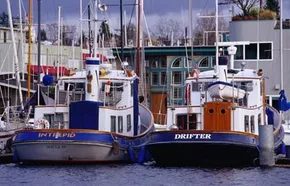
The alarm goes off at seven. You drag yourself out of bed, shower, and chug a coffee while scrambling eggs. Then you step out onto the deck. The sun is rising over the water. You are standing on the bow of a houseboat.
It feels romantic. It looks like a magazine spread. But living on the water is not just about the view.
Human beings have always clustered near rivers and oceans. We like the water. It provides trade, travel, and a sense of freedom. A beach house gets you close to the sea. A houseboat puts you directly on it.
This lifestyle is rare. In 2006, there were 12.7 million registered boats in the US. Only about 6.9% were commercial. Compare that to 126 million households on land. You are a minority.
People who live on these vessels are called “liveaboards.” They make sacrifices. They change their daily habits. Some boats are sleek and expensive. Some are small and modest. The lifestyle varies wildly.
But how does it actually work?
Is it a boat? Is it a house? The answer is both. And neither.
Defining the Vessel: Houseboat vs. Yacht
What makes a houseboat different from a yacht or a pontoon?
A yacht is built for speed and luxury. It is designed to move. A pontoon is a flat platform on tubes. It stays put or moves slowly.
A houseboat is a floating home. It is designed for stationary living. The hull is wide. It is flat-bottomed. This provides stability. It does not rock much. You can walk around without holding on.
Yachts have deep keels. They need deep water. Houseboats have shallow drafts. They can sit in marinas with limited depth.
The interior is the key difference. A yacht’s cabin is for sleeping and socializing. A houseboat interior is for living. It has full kitchens. It has showers. It has bedrooms that feel like rooms on land.
You are not voyaging. You are residing.
The Reality of Liveaboard Life
Living onboard is not a permanent vacation. It is a logistical puzzle.
Space is tight. You cannot hoard clutter. Every item must have a purpose. Storage is vertical. Drawers are shallow.
Utilities are different. You do not have a municipal water line connected permanently. You have tanks. Fresh water tanks. Black water tanks. You must monitor levels daily.
Power comes from generators or shore hookups. Generators are noisy. Shore hookups require a marina slip. You cannot just drop anchor in the middle of a lake and stay there. Most marinas have waitlists.
“Living onboard a houseboat is much different from living in a city or suburb… people who live on them must make certain sacrifices and lifestyle changes.”
The sacrifices are real.
Laundry requires a washer/dryer combo or a trip to a laundromat. Trash must be hauled to shore. Groceries are limited by fridge space.
But the reward is proximity to the water. You wake up to the sound of waves. You see the sunrise from your bedroom window. The air is fresh.
Rules and Regulations: Navigating the Law
Is a houseboat regulated like a car? Or like a boat?
It is regulated like a boat.
You must register your vessel with the state. You need documentation.