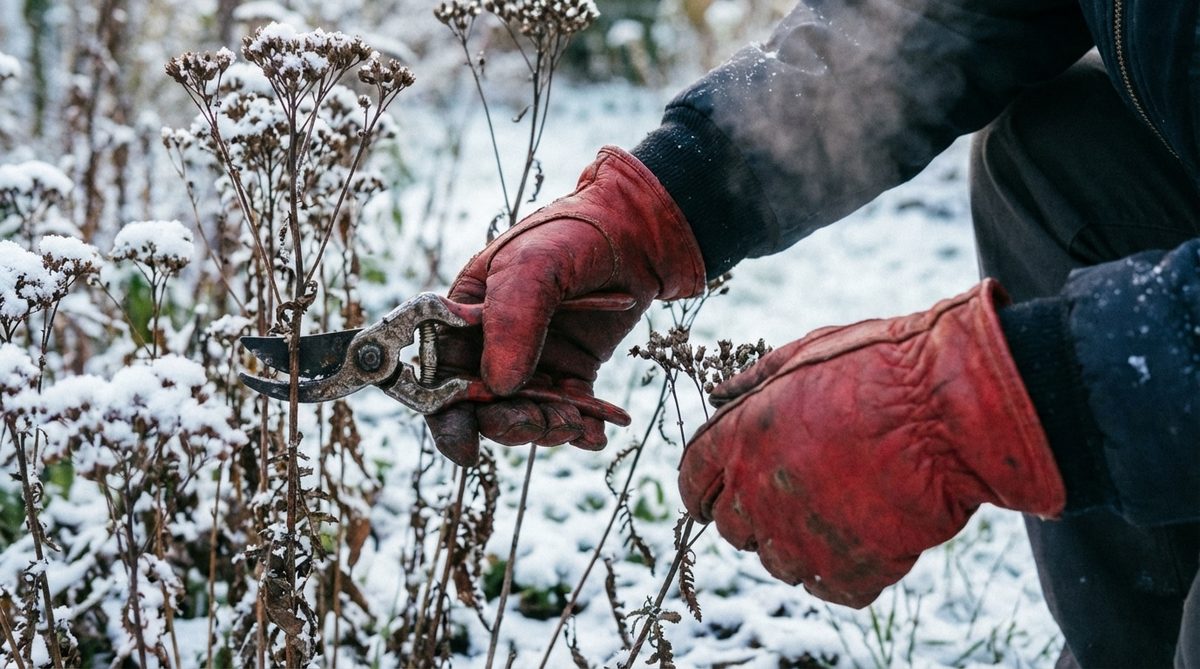
When I look out at my garden in late January, I often feel like I’m staring into empty space. With low skies and temperatures near freezing, it’s tempting to leave the tools in the garage until March. This is a common mistake. Nature really doesn’t sleep. There is a lot of activity underground. Certain plants are waiting for a push to transform your outdoor landscape.
There are simple techniques like pruning and cleaning that can bring bright colors to the fore in early February. This is not a dead period. This is an important turning point for those who know where to focus and more importantly, where to cut.
Why it is better to cut in February than to wait until spring
We need to break the myth that the winter garden has to be monochromatic: browns and grays. While most plants are resting, a certain group of plants, the early flowering perennials, are preparing for frost. These plants can boost morale. It tells us that spring is closer than we think.
Waiting for the official spring calendar means missing out on weeks of spectacular blooms. Some species are biologically programmed to flower before the trees grow new shade-giving leaves in late January. If you intervene now, you can enjoy a miracle that most neighbors will not see until much later, or not at all, if the plants are buried under dead leaves.
Morning star: hellebore, pulmonaries, evening primrose
Among the champions of the season, helleborum (commonly known as Christmas rose or Lenten rose) takes the lead. It blooms even under snow. Next to it, leaves and flowers begin to appear, with spots on the lungs, changing from pink to blue. Don’t forget the lasting primroses. Their garden cousins offer saturated colors to break up the darkness.
These plants are not fragile. They are made for this climate, but require visibility to thrive.
Magic Cut: Sacrifice old leaves to reveal flowers
Let me tell you the secret of the February garden. The flowers are often there but not visible, smothered by the previous year’s leaves that withered and turned black during the winter. Unlocking this potential requires precise technical gestures.
Clean the heart of your Christmas rose for instant results
Hellebores are a good example of the importance of winter pruning. The large, leathery leaves often get dirty and damaged in late winter. Even worse, it hides the new flower stems that grow out of the soil. The trick is to cut off all the old, damaged leaves at the base as soon as the buds appear (late January or early February).
This move has two advantages. It emphasizes the flowers and stands out even from a distance. It also disinfects plants by removing potential sources of fungal diseases.
Gentle cleansing Aubrieta and violet
This method is less daring but no less necessary for groundcovers such as Aubrieta, Golden Feather (Corbeille d’Or) and violet. Remove any debris or dead leaves that have accumulated in the center of the stake. Light washing lets light into the center of the plant and promotes rapid bud formation. If your evergreen leaves are slightly frost-burned, simply pruning the tips of the damaged leaves will immediately improve the overall appearance.
Add richness: turn shy flowers into lush carpets
Once you have cleaned and pruned the plant, you need to encourage continued growth. In February, the days get longer. With a little care you can double or triple the number of flowers compared to placing the plants alone.
Pinch off faded flowers to make violas and wallflowers jump.
This applies especially to pansies (violas) and wallflowers (especially shrub varieties such as Erysimum ). If it had been a warm winter, it might have bloomed. This reflection must be systematic. As soon as the flowers fade, cut or pinch them between your thumb and forefinger. Why? This is because when a plant plants a seed, it considers its reproductive mission accomplished and stops flowering. Removing the withered flowers encourages the plant to continuously produce new buds.
End of winter nutrition
At the end of winter, flowering requires a lot of energy. A spectacular display cannot be achieved in poor soil. Without resorting to harsh chemicals, gently rubbing the surface of the soil and adding a small amount of highly decomposable compost or slow-release organic fertilizer will give you the results you need. As the sap begins to rise, the February rains wash nutrients into the roots.
It starts with surgery. Just one pruning can change the entire dynamic of your garden. It does more than just remove dead material. It removes dead material. It creates space for light and air. The result is a commitment to what comes next, rather than instant perfection. Gray recedes. Color is waiting for you to take the first step.
Growing flowers is easy. Arranging them so they actually matter? This is work. There is little light in February. It is valuable. Placing plants should have a strong visual impact. The goal is to make a dormant garden look alive.
Contrasting Saxifrage Rocailles with Evergreen Foliage
Saxifrage is a small carpet of flowers. Perfect for rockeries and borders. To make it pop, pair it with dark, long-lasting foliage. Bergenia (elephant ear) works well here. Contrast creates strong visual dynamics. It combines the delicacy of early flowers with the durability of large evergreen leaves.
Bergenias often produces bright pink flowers early in the season. Suitable for the soft colors of mountain garden perennials. This is a multi-level approach.
Group Pots Near the House for Sun Exposure
You may find that you spend less time in the back of your garden in February. Focus your visual attention near your living space. Place pansies, early bulbs and hellebores near windows, entryways or patios. Grouping pots creates a huge amount of color. It draws the eye from inside the house.
South-facing walls and window edges absorb heat. They create a microclimate that favors early flowering. Place the plant near a warm area.
Transitioning Smoothly to Spring
It’s not just February flowers. It creates an invisible transition to the spring explosion. The highlighted plant acts as a relay. They are handing over the show to the next wave.
Handing Off to Bleeding Hearts and Tulips
Hellebores and primroses take center stage, but other perennials are also getting ready. Bleeding heart (Dicentra) opens cut leaves usually in late February. Removing the soil around the early plants leaves room for them to spread.
Spring bulbs like tulips and daffodils do better in clean, aerated soil. They naturally sit on already blooming bushes.
Maintaining a Continuous Outdoor Display
Establishing cutting and cleaning routines by the end of January eliminates the idea of developing dead zones. The garden becomes a continuous cycle. Each plant takes over from the previous one.
When the hellebore fades (usually turns green and is still decorative), it is ready for spring planting. This is fluid space management. This requires very little effort. use your secateurs a little earlier than planned.
Winter gardening is not about fighting the weather. This is a smart collaboration with adapted plants. Taking the time to clean hellebores and tidy an aubrieta clump will help color return faster.
Why not put on your boots now? Let’s see what wonders are hidden under the old leaves.