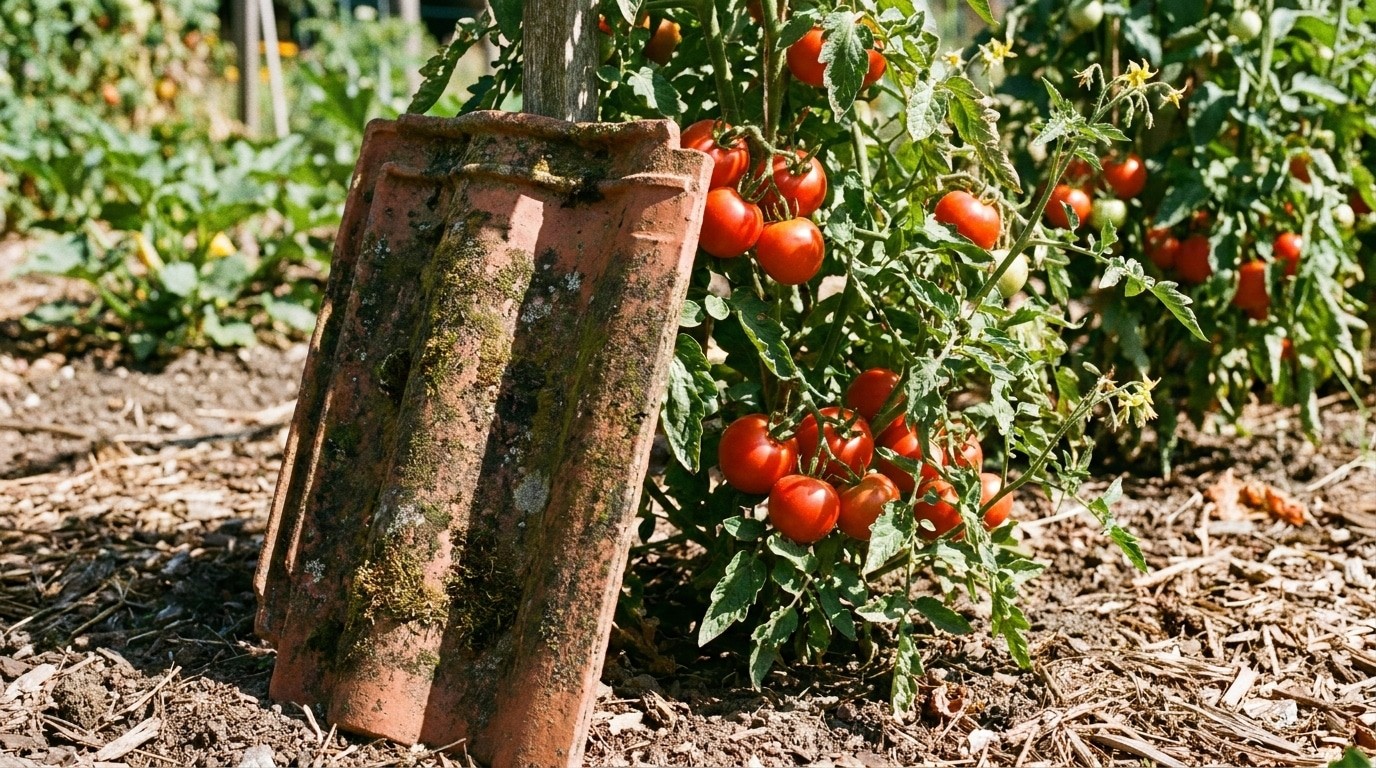
It’s the end of June. The sun scorched the earth and the potager literally suffocates. If you’ve walked through your neighbor’s yard lately, you may have noticed something strange. A terracotta tile flipped upside down at the base of the tomato plants.
This is not rustic decor. This is a survival strategy.
Why does turning the tiles upside down prevent evaporation?
This method is inherited by environmentally conscious gardeners and is based on basic physics. When you turn the curved tile upside down, it creates a small retaining groove. Turn the concave side up. Fill it with water.
Water bypasses hot surfaces. You get directly to the root area.
This is very important during a heat wave. No need to water every day. If you do it early enough, 2-3 times a week is enough. Pour liberally into the slab recess before the sun reaches its peak. Terracotta bricks create shadows on the ground. The earth absorbs water slowly. No rapid evaporation. Save water. Plants stay cool.
Combine with heat shield for maximum protection
Targeted irrigation is only the first step. A defensive perimeter must be created.
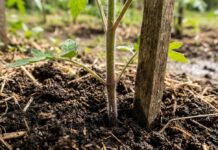
Start with organic mulch. Spread the material around the base 5-10 cm. You can use any straw, hay or wood chips. This layer can slow down drying. It becomes food for soil microorganisms. Stabilize the root ball.
However, if the mercury level rises, coverage alone may not be enough. Add shade cloth.
Cover the green seedlings with blackout netting. During the hottest months, 30 to 50 percent of sunlight should be blocked. This prevents the leaves from burning. The delicate leaves do not tolerate direct midday sunlight. You can buy time by using a blackout cloth. Reduce the ambient temperature around the stem.
Harvest early to reduce plant stress
Too many ripe fruits stress the plant. To keep the plant growing, it uses its limited water and food resources.
Stop waiting for “perfection”. Collect the zucchini, lettuce and tomatoes as soon as they are ready.
Early harvesting significantly reduces the need for water. Plant growth may stop. Totally focused on survival. The logic is simple. A smaller fruit load means less stress.
Combine these three steps.
1. Irrigate in the morning by pouring water.
2. Apply a thick layer of mulch.
3. Use a shade cloth in the hottest months.
4. Harvest aggressively.
Your summer vegetables will face the dry spell without wilting. These are inexpensive and natural methods. These prove that we can adapt to unstable weather without having to fight against nature.
Have you found other household items that double as watering tools? The search for water saving tips is endless.