Mary Poppins sold us a fantasy. Dick Van Dyke in a soot-stained suit singing “Chim Chim Cher-ee” looked romantic in 1964. It doesn’t look romantic now. Soot is carcinogenic. Creosote is explosive. If you ignore the black sludge building up inside your flue, you aren’t just risking a bad smell. You’re risking a house fire.
Most homeowners hire a pro. Smart move. But if you’re handy, have a ladder, and don’t mind getting dirty, you can do it yourself. The key isn’t scrubbing hard. It’s scrubbing right. You need to strip the creosote, not just dust off the surface.
There are four main ways to attack this job. Each requires specific gear. And yes, safety matters. A lot.
What tools do you need to clean a chimney?
Forget the soft brooms from the movie. Those are for show. You need industrial-grade abrasion.
Before you buy anything, measure your chimney flue. Use a tape measure. You need to know the exact width and shape—round, square, or rectangular. If you buy the wrong brush size, you’ll miss spots. Missed spots mean leftover creosote. Leftover creosote means fire risk.
Here is the bare minimum kit for how to clean a chimney yourself :
- Chimney brush : Match this to your flue size. Wire brushes are standard. Nylon “Pellet” brushes work well for smoother liners or tight bends because they have a ball tip that navigates curves without scratching.
- Chimney rods or rope/pull rings : Depends on your method. Rods are rigid. Rope is flexible.
- Shop vacuum : With a HEPA filter if possible. You will be breathing in ash and carbon. Don’t.
- Heavy-duty tarps and drop cloths : Not the cheap canvas ones that rip. You need plastic-backed drops.
- Dust mask and goggles : N95 or better. Soot gets into your lungs. Goggles keep it out of your eyes.
- Metal bucket and shovel : For collecting the debris.
- Flashlight : Chimneys are dark. You need to see what you’re doing.
- Ladder : Unless you use the bottom-up rod method.
- Fireplace cover or plastic sheeting with tape : To seal the room.
- Mirror : To inspect the interior without poking your head in.
Which chimney cleaning method is right for you?
There are four basic approaches. They vary in difficulty, messiness, and safety.
1. The Rod Method (Top-Down)
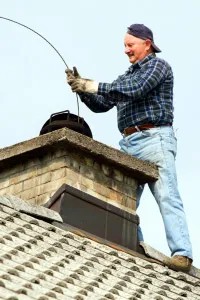
This is the classic approach. You go on the roof.
- Clear the roof area. Remove debris around the chimney cap.
- Insert the brush attached to the first rod through the top opening.
- Lower the brush. Scrub the walls.
- Add more rods as you go deeper.
- Pull the brush back up. Repeat.
Why choose this? It keeps the mess outside. You can tape off the fireplace opening inside your home with plastic and a cover. The soot falls into the bucket or onto the roof, not your living room rug.
The catch? You have to climb. If you’re afraid of heights or have a steep roof, skip this. Safety first. A fall is worse than a dirty floor.
2. The Rod Method (Bottom-Up)
No ladder required. You work from the hearth.
- Seal the room. Cover furniture. Tape plastic over the fireplace opening edges, leaving just enough room for the rods.
- Insert the brush with rods from the bottom.
- Push up. Scrub. Pull down. Repeat.
- Extend rods as needed.
Why choose this? It’s safer for people who don’t like heights.
The catch? It is incredibly messy. You cannot fully seal the fireplace opening while working. Soot, ash, and dust will puff into the room. Even with tarps, you’ll be vacuuming for hours. Wear your mask. Seriously.
3. The Weight Method (Top-Down)
Similar to the top-down rod method, but uses gravity instead of rigid poles.
- Attach a heavy weight (at least 20 lbs / 9 kg) to the bottom of your brush.
- Use a strong rope and pull rings.
- Lower the weighted brush from the roof.
- The weight keeps the bristles pressed against the chimney walls as you raise and lower the rope.
Why choose this? It’s easier to maneuver in chimneys with offsets or bends. The weight ensures consistent pressure. You can still seal the fireplace from below.
The catch? You still need to be on the roof. And managing heavy weights on a roof requires care. Don’t drop the weight.
4. The Bottom-Up Rope Method
This is the hardest DIY method. Rarely recommended for novices.
- Lower a weighted brush from the roof.
- Retrieve the rope from the fireplace opening below.
- Pull the brush up and down from the hearth.
Why choose this? Only if you have a very straight, accessible chimney and want to avoid carrying rods up and down.
The catch? It’s tedious. The rope can tangle. It’s messy. And if the brush gets stuck, you have a nightmare scenario. Most DIYers stick to rods.
Safety and cleanup tips
- Check for damage : Before you scrub, shine your flashlight. Look for cracked tiles, loose mortar, or rusted liners. If you see structural issues, stop. Call a professional. You can’t fix a broken chimney with a brush.
- Ventilate : Open windows in the room below. Run the fan on your HVAC system to exhaust air, or use fans to blow air out.
- Dispose of waste properly : Chimney soot is hazardous. Don’t just shovel it into the regular trash if possible. Check local regulations. In many places, it needs to go into a sealed metal container or hazardous waste facility.
- Inspect after : Use your mirror and flashlight to check for remaining buildup. If it looks black, scrub again. You want to see the color of the liner, not the color of night.
Cleaning your chimney isn’t just about aesthetics. It’s about keeping your home safe. Creosote is highly flammable. A spark from your fireplace can ignite it. Once a chimney fire starts, it burns at thousands of degrees. It can crack your liner. It can spread to your attic.
Do it right. Or don’t do it at all. Hire someone. But if you do it yourself, respect the grime. It’s not just dirt. It’s potential fuel.
The dual line chimney cleaning method requires two people and a lot of patience
This approach needs a partner. You attach a rope with a pull ring to both ends of your brush. One person climbs onto the roof, grabs the setup, and feeds it down the flue. They hold one end of the rope tight. The other person stays inside at the fireplace, grabbing the second end.
Now comes the workout. You take turns pulling. Up. Down. Up. Down. The brush scrubs the internal walls as it moves. It’s effective but messy. You can’t seal the fireplace opening with this method, so soot flies everywhere.
Lay down tarps. Use drop cloths. Protect your flooring and furniture. If you skip this step, you’ll be vacuuming your living room for hours.
How to verify your chimney is clean and handle the aftermath
Once the scrubbing stops, check your work. If you’re on the roof, use a flashlight to peer down the flue. If you’re inside, shine a light through a mirror angled at the opening. You need to see if any creosote patches remain.
Assume it’s clean? Double-check. Better safe than sorry.
When you’re satisfied, clean the mess. Vacuum or sweep all the dust, dirt, grime, and soot from the bottom of the fireplace and the hearth. Don’t leave it there. It’s toxic and unsightly.
Safety concerns when cleaning a chimney yourself
Stop. No fires. Do not start cleaning if there is any heat or flame in the fireplace. It seems obvious, but people get careless.
Then there’s the height. Ladders and roofs are dangerous. A fall can mean paralysis or death. Be aware of your surroundings. Watch your footing.
Or skip the roof entirely. The rod method from the bottom up is safer because no one has to climb. It’s the best option if you’re nervous about heights.
Protect your body. Wear goggles. Wear a dust mask or full-face respirator. Soot and ash irritate eyes and lungs. Don’t breathe in the black dust.
If any of this feels wrong, call a pro. There’s no shame in hiring someone else.
Why creosote removal matters for long term chimney safety
You survived the ladder. You didn’t inhale too much soot. Are you done?
Not necessarily. Did you remove all the creosote?
Creosote is a sticky, tar-like buildup. It’s hard to scrub off. But you have to. It’s the primary cause of chimney fires.
Chimney fires spread fast. Flames can jump to your roof in seconds. From the roof, fire travels anywhere in the house.
Check your brush after every pull. If it comes out coated in black goo, keep scrubbing. Until it comes out clean, you’re not finished.