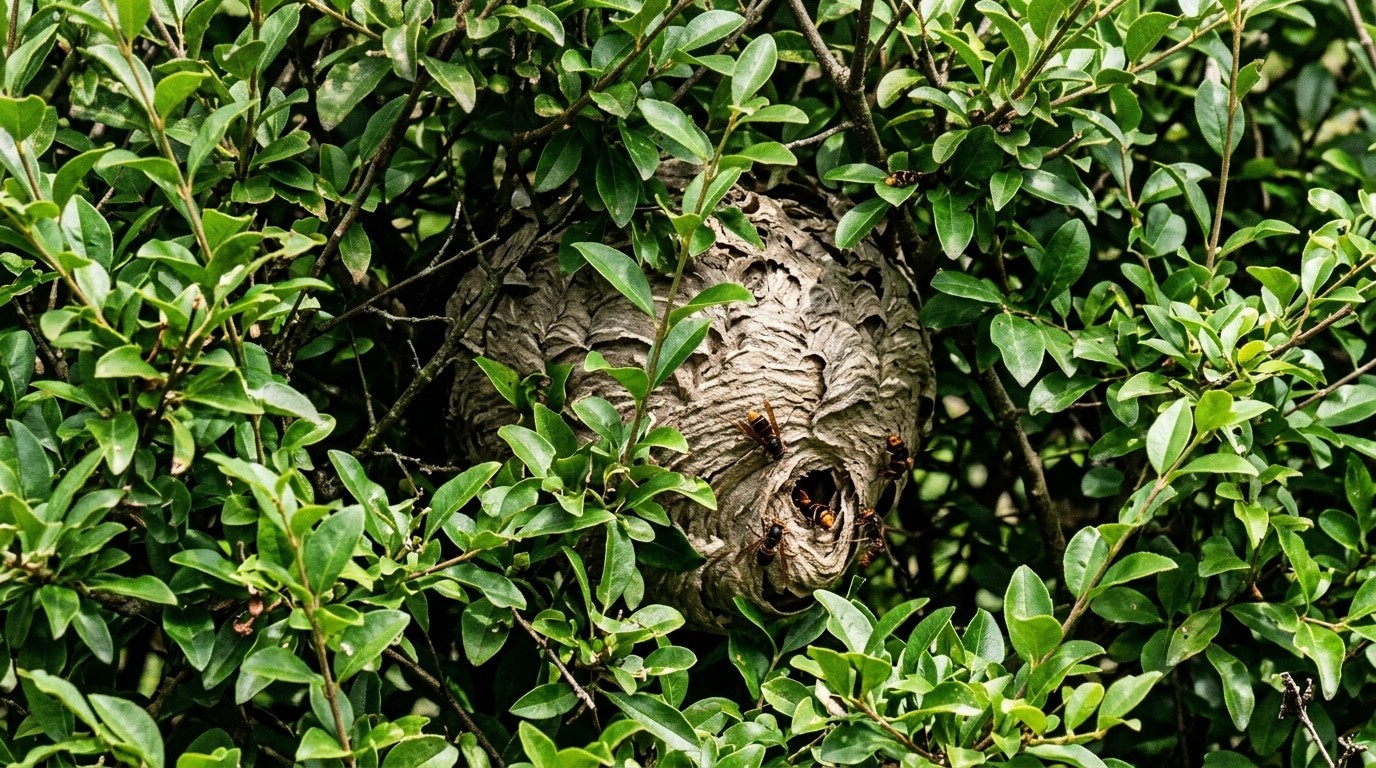
You love the smell of green things in summer. You love the look of a sharp hedge. You pick up your shears. You start cutting.
Then the noise starts.
It’s not the motor. It’s a low, angry hum from inside the bush. You just shook a hornet’s nest. And now, they are coming for you.
This isn’t a horror movie plot. This happens in backyards every July.
Why pruning your hedge can be deadly
Most people think hedge trimming is just yard work. It’s not. It’s a tactical operation.
When you cut branches, you send vibrations through the wood. To a sleeping colony of Asian giant hornets, those vibrations look like an invasion. They don’t think twice. They attack in groups.
If you hit a nest by accident, you aren’t dealing with one sting. You are dealing with dozens. Hundreds.
The venom from multiple stings can cause anaphylactic shock. It can stop your heart. It can kill you. Even if you aren’t allergic, the sheer volume of venom overwhelms your body.
The sound of your shears is a declaration of war to the insects hiding in the shadows.
How to check for hornet nests before you cut
Don’t guess. Check.
Before you buy tools at Leroy Merlin or Botanic, or even before you touch your old ones, you need to scan the bush. Look at the structure. Look for movement.
Here is the safe way to inspect your hedges:
- Watch the foliage. Look for insects entering or leaving holes. If you see a steady stream of large insects, stop. That is a nest.
- Use a stick. Do not lean in. Stand back. Gently tap the trunk or thick branches with a long pole.
- Listen. If the humming gets louder, or if insects start flying out, you found the nest.
- Back away. Calmly. Do not run. Do not wave your arms. Just leave the area.
If you find a nest, do not try to remove it yourself. These are aggressive predators. They defend their “fortress” with lethal force. Call a professional pest control specialist. They have the gear. You have a garden hose and a bad idea.
Which tools are safe for DIY hedge maintenance?
The tool doesn’t matter if the target is wrong. But having sharp, clean tools helps you work faster and make cleaner cuts, which means less time near the bush.
- Electric hedge trimmers: Loud. Good for thick hedges. The vibration is higher. Be extra careful.
- Manual shears: Quiet. Precise. You can hear the buzz before you cut. This might be safer for sensitive areas.
- Pole pruners: Keep you at a distance. Good for high spots you can’t see clearly.
The real safety tool is your eyes.
Why patience saves your life in the garden
Green spaces are wild. They belong to the wildlife first. You are a guest.
When you approach a hedge, assume it is occupied. Scan for wasps. Scan for hornets. Scan for bees.
If the bush is quiet, proceed. If it sounds like a distant refrigerator, wait. Or go find a different hedge.
You can trim your garden safely. You just have to respect what lives in the leaves.
Did you check your bushes today? Or did you just start cutting?