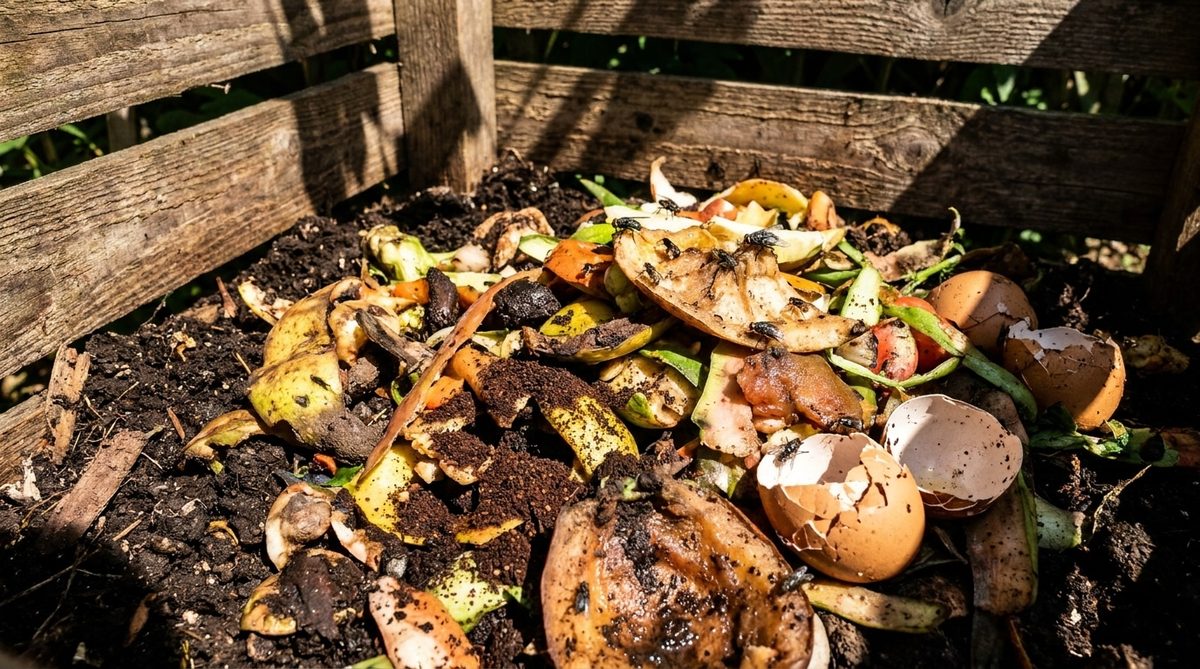
Summer brings a surge in home composting. You cut the grass, you chop vegetables, and you toss the scraps into the bin. It feels like a responsible choice. You are reducing waste and feeding your soil.
But there is a hidden risk.
A simple pile of organic matter can escalate from a gardening hobby into a legal nightmare. Your neighbor might complain. The local authorities might get involved. You might find yourself facing a lawsuit over a pile of rotting leaves.
Most people assume the problem is spatial. They think there is a strict rule about how far the bin must be from the fence. They worry about property lines.
This is a myth.
No legal minimum distance for compost bins in France
It is easy to assume that setting up a compost bin follows the same rigid rules as planting a large tree or building a shed. In many countries, setback distances are strict.
In France, they are not.
There is no national law that mandates a specific minimum distance between a domestic compost bin and a shared fence or boundary. Theoretically, you can place your container directly against the separating grid. You are not violating urban planning codes.
This freedom is confusing.
Gardeners often place their bins right up to the line. Then, a complaint arrives. It lands in the mailbox like a surprise attack. The neighbor is unhappy. But the issue is not where the bin sits.
The issue is what the bin does.
Odors and flies trigger the “abnormal neighborhood disturbance”
The real legal danger lies in a concept called trouble anormal de voisinage (abnormal neighborhood disturbance).
This principle protects residents from nuisances that go beyond what is considered normal for the area. It is not about inches or centimeters. It is about impact.
Summer heat makes this worse. High temperatures accelerate decomposition. If the bin is not managed well, it ferments.
Fermentation produces bad smells.
It also attracts pests. Flies swarm the bin. They buzz around the neighbor’s window. They land on their table.
If these odors or flows exceed normal inconvenience, the law sides with the complainant. Courts consistently rule against composters who let their bins become sources of nuisance. The distance is irrelevant. The smell is everything.
How to maintain your bin and keep the peace
Avoiding conflict does not require moving the bin. It requires better maintenance.
You need to keep the decomposition process healthy. A healthy compost pile does not smell. It smells earthy. It smells like forest floor.
Here is how to achieve that.
Balance wet and dry materials
A compost bin needs two types of ingredients. Green materials are wet. Think grass clippings and vegetable peels. Brown materials are dry. Think cardboard, dried leaves, and straw.
The ratio is critical. Too much green matter creates a slimy, smelly mess. Too much brown matter slows down the process.
Aim for a balance. Add a layer of dry material after every layer of wet waste. This absorbs excess moisture and reduces odor.
Aerate regularly
Stagnant matter rots. Rotting matter stinks.
You need oxygen. Use a compost aerator to turn the pile. This tool breaks up clumps and mixes the contents. It introduces air into the core of the bin.
Do this regularly. A weekly turn is a good habit. It prevents the formation of anaerobic pockets. Anaerobic decomposition is the primary source of the nauseating smells that trigger legal complaints.
Choose the right location
Sunlight heats the pile. In July, direct sun can overheat the compost. Overheating kills beneficial microbes and speeds up bad odors.
Place the bin in the shade. Under a small tree or shrub is ideal. It keeps the temperature stable. It protects the microbial ecosystem.
Use the right tools
You do not need expensive equipment. But you do need basic tools. A simple pitchfork or a specialized aerator is sufficient.
You can find these items at major garden centers. Stores like Jardiland or Leroy Merlin stock suitable bins and accessories. The key is to have a tool that makes turning the pile easy. If it is hard to mix, you will not mix it. If you do not mix it, it will smell.
The bottom line
Composting is a powerful tool for homeowners. It reduces waste. It improves soil. It saves money on fertilizer.
But it requires care.
The law does not care about your bin’s position. It cares about your neighbors’ experience. If the bin smells, it is a problem. If it attracts flies, it is a problem.
Focus on technique.