There are few things as miserable as shivering in your own living room while the wind howls outside. But staring at a heating bill that feels like a personal attack is nearly as bad. Space heating is the single biggest energy expense for most American households, soaking up roughly 45 percent of annual utility costs. If you run on natural gas, that’s about $950 a year. Oil users? You’re looking at a staggering $2,115. Summer cooling adds another layer of pain, often accounting for half of your seasonal energy spend.
So what do we do? We bundle up in sweatpants. We strip down and crank the AC. We fiddle with the thermostat until our fingers are numb. The most common tactic is to drop the temperature when we leave for work or head to bed. It feels logical. Why heat an empty house? But there’s a persistent myth that turning the heat down costs more to re-raise it later than it saves.
This is where many homeowners get it wrong. Understanding how to save money on heating and cooling isn’t just about willpower; it’s about physics.
The Myth of the Harder-Working Heater
You’ve likely heard the argument: a cold house is harder to warm up than a warm one is to keep warm. The U.S. Department of Energy calls this a “common misconception.” It sounds intuitive. A frozen engine is harder to start. But heat doesn’t behave like a car engine.
Heat naturally flows from hot areas to cold areas. When your thermostat is set high, the temperature difference between your indoors and outdoors is large. Heat escapes your home rapidly. Once you lower the thermostat, that gap shrinks. Your house loses energy much more slowly when it’s cooler.
The truth is that it requires more energy to keep the house at its normal temperature than to heat it back to that temperature after dialing the thermostat down.
Think of it this way: maintaining a steady 72°F requires constant energy output to fight the cold outside. Lowering that to 65°F reduces the rate of heat loss. The energy “saved” during the setback period outweighs the extra burst of energy needed to bring the temperature back up. This principle applies to cooling too. Letting the house warm up when you’re gone slows down heat gain. When you return, the AC has less heat to remove than if you had fought to keep it at 72°F all day.
The Sweet Spot for Savings
Does this mean you should shut the furnace off entirely? No. There are risks. If a house gets too cold in winter, pipes can freeze and burst. In summer, excessive heat and humidity can warp wood floors and damage cabinetry. You need a strategy, not a shutdown.
For winter, aim for 68°F (20°C) when you’re home and awake. When you’re asleep or away, drop it to 55°F (13°C). In summer, keep it at 78°F (26°C) when you’re home. When you leave, let it climb higher.
According to the DOE, setting back your thermostat by 10 to 15 degrees for eight hours a day can save you 5 to 15 percent on annual heating costs. That’s real money back in your pocket. But if you’re relying on manual adjustments, you’re leaving savings on the table.
Why Manual Adjustments Fail Most People
Here’s the problem with the standard advice: humans are inconsistent. You might remember to lower the heat before work. You might even do it on weekends. But do you do it every single day? Do you lower it when you go out for groceries? Do you raise it back up exactly when you return?
Most people don’t. They come home, realize the house is freezing, and crank the heat to maximum, hoping for quick comfort. This defeats the purpose. The setback didn’t last long enough to save significant energy. Or worse, they leave the heat running all night because they’re tired and forgetful.
This is where technology steps in. Not all smart thermostats are created equal, but the right one learns your schedule. It knows when you leave for work. It knows when you go to bed. It automatically adjusts the temperature to maximize savings without making you think about it. You get the 5 to 15 percent savings because the setback actually happens. And when you return, the house is comfortable. No shivering. No guilt.
Is a Smart Thermostat Worth the Investment?
The hardware costs money. Installation can add to that, depending on your home’s wiring. If you don’t have a C-wire, you might need an adapter. But consider the payoff. If you’re spending $950 a year on heating, a 10 percent saving is $95. A 15 percent saving is $142.50. Over five years, that’s nearly $500 to $700 in savings, before you even account for the cooling benefits in summer.
But beyond the math, there’s the convenience factor. You control your climate from your phone. You get alerts if the temperature drops too low, preventing frozen pipes. You can see exactly where your energy is going. This visibility changes behavior. When you can see that leaving the AC on for an empty house cost you $3 that day, you’re less likely to do it again.
What About the Hardware Itself?
Before you buy, check your current setup. Do you have a programmable thermostat? These are the predecessors to smart models. They work on schedules you set manually. They’re cheaper. But they require discipline. If your schedule changes—shift work, vacations, naps—they become useless unless you reprogram them every time.
Smart thermostats use sensors and geofencing. Geofencing uses your phone’s location to know when you’re leaving or approaching home. Some models even have room sensors to balance temperature across different areas. Look for models that are ENERGY STAR certified. They meet strict efficiency guidelines.
You don’t have to live in a refrigerator to cut your energy bill. Thermostats are the obvious first move, but they are hardly the only lever you can pull. There are simple, hands-on adjustments that shrink your heating and cooling costs without turning your home into a drafty mess.
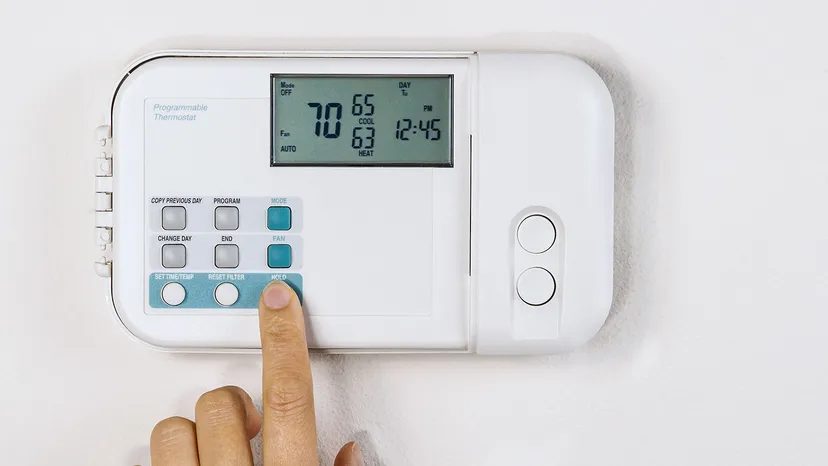
The biggest win? Smart scheduling. If you still have a dial thermostat, you’re leaving money on the table. Upgrading to a programmable model lets you set the stage for your day. The heat comes on before you wake up. It kicks in when you get home from work. You can store these daily patterns and override them manually if a cold snap hits unexpectedly.
But wait. Stop.
If you heat with a heat pump, tread carefully. These systems hate the see-saw effect of constant temperature swings. In heating mode, heat pumps are most efficient when they run at a steady, moderate pace. Cranking the heat up and down all day cancels out the efficiency gains. For heat pump owners, consistency beats convenience. Keep the temp stable.
Keep the System Breathing
Hardware matters. A neglected HVAC system is a money pit. Start with the filters. They trap dust, pet dander, and debris. When they clog, the system works harder to push air through. Replace them regularly. Clean them monthly if you have pets.
Look at the outdoor unit. It needs space. Remove leaves, dirt, and corrosion around the condenser. If the coils are dirty, the heat exchange suffers. Inside, check your vents. Furniture blocks airflow. Curtains cover radiators. Unobstructed air means the system doesn’t have to fight against its own design.
Sealing is key. Air leaks in ductwork or around heating pipes are silent thieves. Inspect them. Seal gaps with mastic or metal-backed tape. Don’t use cloth tape. It falls apart.
Burn Calories, Not Fuel
Here is an angle most homeowners ignore. Lowering the thermostat isn’t just about bills. It’s about biology.
Studies suggest that cooler environments boost metabolism. Your body has to work harder to stay warm. That means burning more calories. You don’t need to sleep in an igloo. Drop the thermostat to the low 60s. You might feel a chill at first, but your body adapts. You get a metabolic boost without the heavy cost of a furnace running hot. It’s a subtle shift. The results add up.
Turning Heat Down: The FAQs
Does turning down the thermostat actually save money?
Yes. It’s not a myth. Lowering your thermostat by seven degrees for eight hours a day—like while you sleep—can cut your heating bill by nearly 15 percent. The math is simple: less heat lost means less heat replaced.
How do you turn your heat down?
It’s usually intuitive. Find the thermostat. Use the arrow buttons to decrease the setpoint. Some older systems require manual dials. If you have a smart thermostat, use the app. The goal is consistency. Stick to the new lower setting for a while before adjusting again.
What temperature should you keep in the spring?
Spring is tricky. It depends on your climate. But a solid rule of thumb is 68 degrees Fahrenheit in winter and 78 degrees in summer. In spring, you can likely stay closer to the lower end as the weather warms. Dress in layers.
Is it bad to turn the thermostat up and down?
No. That is a persistent myth. It does not hurt your furnace to let the house cool down and then heat it back up. In fact, maintaining a high temperature all the time uses more energy than heating a cold house once. Your system fights to maintain warmth against drafts all day long. Turning it down and letting it rest is smarter.
The thermostat is just the start. The rest is maintenance, awareness, and a willingness to be slightly cooler for a bit longer. Your wallet will thank you. Your body might too.