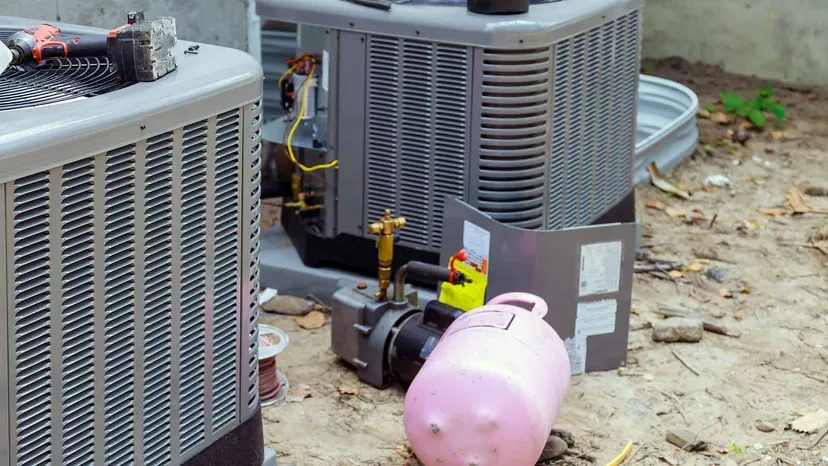
You probably assume your air conditioner runs on Freon. It’s a safe bet. Your car’s AC system likely uses it too. Refrigerants are what make the magic happen, turning warm air into cold air. Freon is just the most famous name in the lineup. It isn’t the only option. Not every unit needs it. Let’s clear up what Freon actually is before we dive into keeping your home cool.
What Is AC Freon?
Freon is a brand name. DuPont created it for their proprietary R-22 coolant. Think of it like Kleenex for tissues or Q-tips for cotton swabs. People use the brand name to refer to the category. Other refrigerants exist. R-12 and R-410A are common alternatives. They are all often colloquially called Freon.
These gases are colorless. They work by absorbing heat and humidity from your indoor air. Then they expel that energy outside. Theoretically, Freon could last forever in a sealed system. It doesn’t get used up. It just circulates. In reality, most systems develop leaks. Eventually, you will need a refill.
3 Steps to Get the Most Out of Your Home Air Conditioner
Most homes view air conditioning as a convenience. In hotter climates, it’s a necessity. Summer temperatures can hit triple digits. You need the system to work. Follow these maintenance steps. They extend the life of your unit. They keep your family cool for years.
1. Check your Freon levels regularly.
Low refrigerant is a common cause of poor AC performance. Minor leaks are the usual suspect. Check levels monthly. This keeps you on top of maintenance. It also provides early warning signs of failure. A simple Freon recharge might be all you need to restore peak performance. Don’t wait for the system to quit completely.
2. Perform maintenance to improve your air conditioners.
DIY maintenance pays off. Trim landscaping around outdoor units. Ensure adequate venting space. Check for Freon leaks. Clean vents. Change air filters. These small tasks extend the functionality of your equipment.
Online tutorials offer step-by-step instructions. They are helpful resources. But know your limits. If you feel uncomfortable, call a professional. Trial and error can damage costly equipment. It’s better to be safe than sorry.
3. Schedule annual air conditioning system inspections with an HVAC technician.
Don’t wait until the heat wave hits. Schedule inspections early. HVAC technicians are trained to spot failing heating and cooling equipment. They see the telltale signs before you do.
Annual inspections save money. They allow for the replacement of small components. Think compressors or condensers. This prevents the need for a full unit replacement. Specialists can also provide a quick Freon charge. They fix refrigerant leaks. Your system stays at optimal performance during the warm months.
Drawbacks of Freon AC Systems
Manufacturers of Freon gases, known as hydrochlorofluorocarbons (HCFCs), claim low health risks. They say common usage in maintained systems is safe. The EPA disagrees. They argue these claims ignore chronic toxicity hazards. Leaking refrigerant liquid is dangerous. The global implications are significant.
The EPA classifies Freon and HCFCs as ozone-depleting substances. They contribute to ozone layer depletion. Phasing out began in 2010. Air conditioners manufactured after 2005 likely do not use R-22 Freon. Units made after January 1, 2010, are prohibited by law from using R-22. They use R-410A instead.
Refrigerant leaks reduce cooling performance. This increases energy costs. Your bills go up. Ozone depletion continues. New units are significantly more energy-efficient. Older models struggle to keep up.
Freon Refrigerant in Your Car’s Air Conditioning System
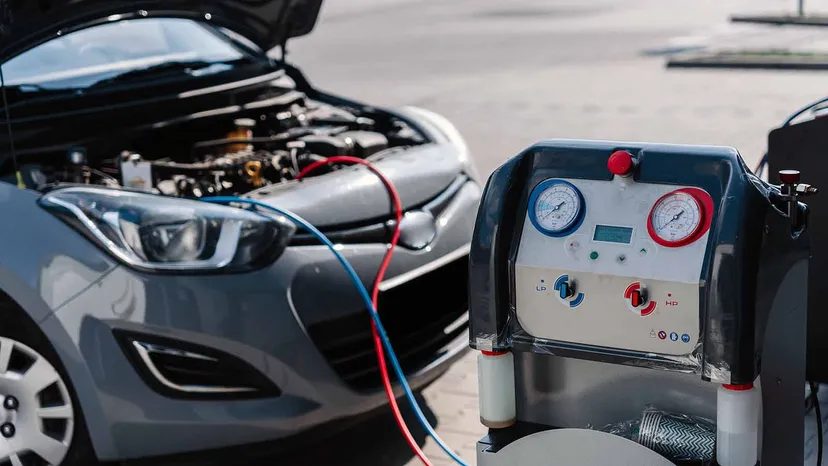
Car AC Systems: The Circulatory Loop
Your car’s air conditioning isn’t just about comfort. It’s a closed-loop machine that mimics a biological system. Think of R-410A Freon refrigerant as the blood. It carries heat away from your compressor, which acts like a heart. Low-pressure vapor enters the suction line. The compressor squeezes it. Pressure spikes. The vapor heats up.
This high-pressure gas moves to the condenser. A fan blows air across the coils. The gas cools. It turns back into a liquid. Pressure drops at the expansion valve. The fluid rushes toward the evaporator coils.
Inside the cabin, a blower fan pulls warm air over these cold coils. The air chills. The fan pushes the cool air back into the car. The cycle repeats. If it stops, you’re driving in an oven.
Before the Refrigerator
We take the ice button for granted. It’s a luxury of the 20th century. Before modern cooling, humans were at the mercy of the seasons. For millennia, food preservation relied on salt, smoke, or cold storage in the earth. Hand-dug cellars kept temperatures stable. Caves worked too. But not everyone had access to geology that stayed cool.
The wealthy and royal classes played a different game. They imported ice. This wasn’t local ice. It came from arctic regions. Ships and trains carried blocks of frozen water to palaces and manors. It was expensive. It was complex. It was reserved for those who could afford to defy the weather.
Today, you press a button. The cycle begins automatically. No ships. No cellars. Just electricity and refrigerant.