Everyone hates patchy, bare hedges. You want a thick, even green wall to block the view from your neighbors without appearing to die. It’s an annual little drama, especially when local ordinances go into effect or when spring finally arrives. You picked up the scissors thinking it would be easy. This is not true.
The secret is not in the tools. This is the angle.
Most gardeners cut branches vertically. This is wrong. To create thick, healthy hedges, you need to master the taille en biseau or miter cut. It sounds technical, but you just change the angle of the tip. This one adjustment changes the way light hits your plants, which in turn changes how they grow.
Why cutting angle affects growth
The vertical cut gives you a neat look all day long. After a week, the upper branches prevent sunlight from reaching the lower branches. The bottom of the hedge is in the shade. Growth stops. It turns brown. This leaves a gap.
taille en biseau solves this problem. Make the cut at a small angle (about 15-20 degrees). This causes the top of the bush to lean back slightly. Sunlight now penetrates deep into the leaves. The light hits the lower branches. They stay green. they grow.
This method promotes active and steady regeneration. Prevents unsightly “holes” that make your bush look tired. Accuracy is evaluated. It punishes haste.
削弱你的对冲的常见错误
您现在可能至少犯了其中一个错误。
垂直斜线
如前所述,直接向下切割会产生阴影陷阱。 顶部的叶子消耗了所有的阳光。 底部的叶子挨饿。 树篱从地面向上逐渐变薄。 它看起来稀疏且不健康。
钝或脏的工具
生锈或未锋利的剪刀会压碎茎,而不是切片。 压碎的茎需要更长的时间才能愈合。 他们会招致疾病。 再生变得不稳定。 您甚至可能会看到真菌问题蔓延。
留下的碎片
不要让小树枝碎片挂在主树枝上。 这些死角会积聚水分。 它们会吸引寄生虫。 它们成为真菌的滋生地。 脆弱的树篱很容易成为害虫的目标。 干净的伤口愈合得更快。 他们保持健康的时间更长。
掌握剪辑
掌握正确的技术需要练习。 从一小部分开始。 专注于角度。 目标是 15 到 20 度的斜坡。 确保你的刀片锋利。 如果您要处理易患病的物种,请在植物之间擦拭它们。
目标是密度。 方法是斜角。 如果忽略角度,您将需要花费数年时间来修剪裸露的木材。
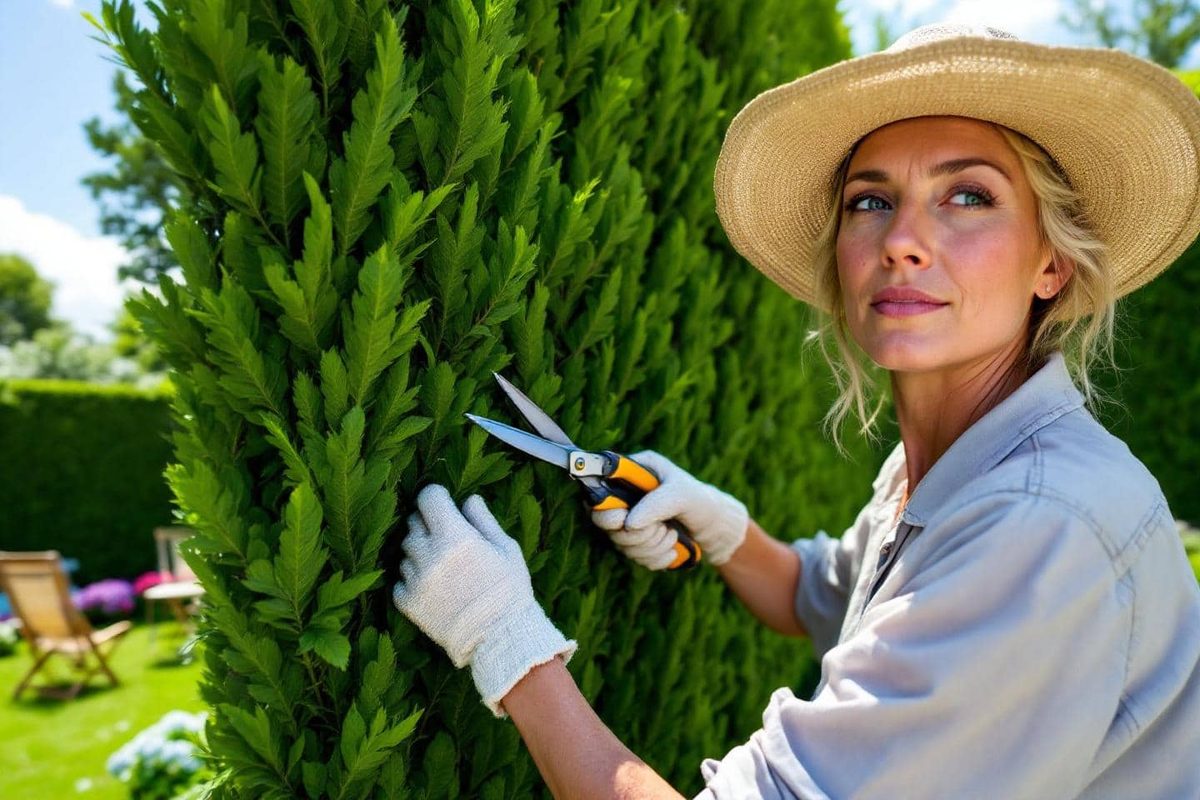
You know the trick with the 15 degree angle. It is the secret that the light reaches the lower leaves. But knowing the angle is only half the battle. The other half? Choose the right tools and cut at exactly the right time. If you mess up the timing or use dull blades, a perfect angle won’t save you from a sparse, unhealthy bush.
Here we look at the practical side. The details that turn a hobbyist’s work into a professional result. From early spring to late summer, your approach needs to change.
Choosing the right equipment for the job
Do not grab any scissors. Tools are just as important as technology.
For thin branches, sharp bypass pruner are necessary. A clean cut is needed for quick healing. A bruised wound leads to illness. High-quality hedge shears can get through the thicker, woody parts of a dense hedge. They cleanly cut through several stems at the same time.
If you have a long row of privet or boxwood, electric or gas powered hedge shears are effective. They save your hands. But they lack accuracy. Use the machine for bulk removal. Switch back to hand shears to finish. Precision creates this tight, formal look.
A cutting angle of 15 – 20 degrees is the optimal cutting point. It promotes rapid callus formation. It also forces the new growth to remain dense.
Start from the bottom. Work your way up. This creates a trapezoid shape – wider at the bottom, narrower at the top. It’s not just aesthetic. It’s biological. Lower leaves need sunlight. If the upper part covers the light, the lower part goes bare.
Keep the blades sharp. Sharpen them before each session. Disinfect with rubbing alcohol. It sounds extreme, but it prevents the spread of blight and fungal infections from plant to plant.
Timing Your Cuts for Maximum Density
When you cut things. Cut too early and the frost will kill the new growth. If you cut too late, the plant will doesn’t harden off.
Most hedge species have two main windows.
1. Spring Cut (March-April)
Wait until the danger of frost has passed. This first cut stimulates the flow of sap. It shows the plant sprouting new shoots. This sets the stage for the season.
2. Late Summer Cut (end of August – beginning of September)
This is a lighter cut. It thickens the hedge before autumn. This will maintain enough growth to survive winter the winter. Avoid cutting during heat waves. Avoid cutting just before freezing. The plant needs time to recover.
Year-round maintenance guarantees a flawless appearance
Trimming is only part of the equation. Hedges require maintenance between cuts to keep them thick and green.
Growth stimulation without stress
After a hard cut, the bush is shocked. Water it deeply. Especially if the soil is dry or the spring was rainy.
Add biological mulch around the base. Pine bark or dried grass clippings work well. Mulch retains moisture. It protects shallow roots. It keeps the soil temperature stable.
Feed the hedge with compost. Mature compost adds nutrients without burning the roots. It increases the density of the leaves.
Trim dead or crossing branches throughout the season. This will open the canopy. It allows air to circulate. It gives room for new buds to develop. This traditional practice prevents disease and keeps the plant strong.
Prevent Bare Spots
Regular, light maintenance is better than big annual overhaul.
Walk the hedge every few weeks. Remove damaged branches. Cut off weak growth. This keeps the shape remains constant. It prevents gaps.
If you notice a thin spot, lightly trim the surrounding branches. This forces the plant to branch out in that location. It takes patience. But even a frayed hedge can be revived.
Clean up after yourself. Rake all the clippings. Leaving them on the ground can trap moisture and promote rot or disease. Compost them instead. Turn waste into fertilizer.
In many places, it is a common tradition to share compost with neighbors. It’s a small gesture. But it builds community. And it closes the garden waste loop.
Result
A dense, healthy hedge is a visual anchor for your garden. It offers privacy. It adds structure. It looks good all year round.
The key is bias cut, the right tools and the right timing. It’s a skill. But it can be learned. It respects the plant’s natural cycles. It rewards attention to detail.
The next time you pick up a pair of scissors, think about the angle. Think about the health of the plant. Try the method. See how the hedge reacts.
What will your hedge look like after this season?