Small things have big personalities.
That is the rule. These little blooms pack color, scent, and grit into packages that fit between pavers, in rock walls, or on shelves where bigger plants just don’t fit. They attract butterflies with easy access to nectar. They thrive in the cracks.
But be careful. Some look sweet and act dangerous.
Warning : Do not ignore toxicity. Lobelia, dianthus, lilly of the valley, foxgove, butterfly weed, lantama, and yarrow can poison humans and pets. Keep them away from curious toddlers and sniffing dogs. If you have kids running around, double-check every stem.
Not everything pretty is safe to touch.
Here is how to work with twenty-three of them. Or maybe just pick three. The list is long because options are plentiful.
The fillers
Baby’s breath (Gypsophila spp. )
You see it in bouquets. Cheap filler. Ignore that reputation. It survives in the ground. Dry soil? Fine. Alkaline soil? Better. Zones 4-9. White is standard, but pink and orange exist too. ‘Bristol Fairy’ works. It stays 2-3 feet tall. Deer stay away.
Fairy foxglove (Erinus alpinus )
Not the tall garden variety. This is low. 2 inches high. Feathery petals. Zones 4-7. It likes shade, unlike most rock garden plants. Put it in a crevice. Let it go. It smells nothing special but looks delicate. Deers don’t eat it.
Forget-me-not (Myosotis sylvaticaa )
Small. Blue. Yellow eyes. Zones 3-8. They die back after a year, so they self-seed aggressively. Plant them in moist woods. Rabbits leave them alone. That is rare. Most deer respect them too. Just let them go to seed if you want more.
Kenilworth ivy (Cymbalaria muralis )
Scalloped leaves. Lavender flowers. Zones 6-11. It spreads. It covers stone. It likes moisture. In cold places, it seeds out. It isn’t truly hardy in zone 5, but nature ignores zones. Cut it back or let it trail.
Spring and summer bursts
Lobelia (Lobelia erinus )
True blue. Zones 6-8 annuals. Hot nights kill the bloom. Shear them. Water them. They come back. Fragile in heat, tough in pots. Toxic if eaten, so keep off low tables with pets nearby.
Rock cress (Arabis spp. )
Purple clouds. Pink spikes. Zones 4-7. Evergreen foliage underneath. Cut them after spring blooming or they get leggy. They stay low, 4 to 9 inches. ‘Axcent Lilac’ is popular for a reason. It works.
Snow-in-summer (Cerastium tomentosum )
Silver leaves. White flowers. Zones 3-7. Tough as nails. Full sun. Dry soil. It covers everything. If you want control, don’t plant it in full sun with wet soil. Otherwise, it becomes the lawn.
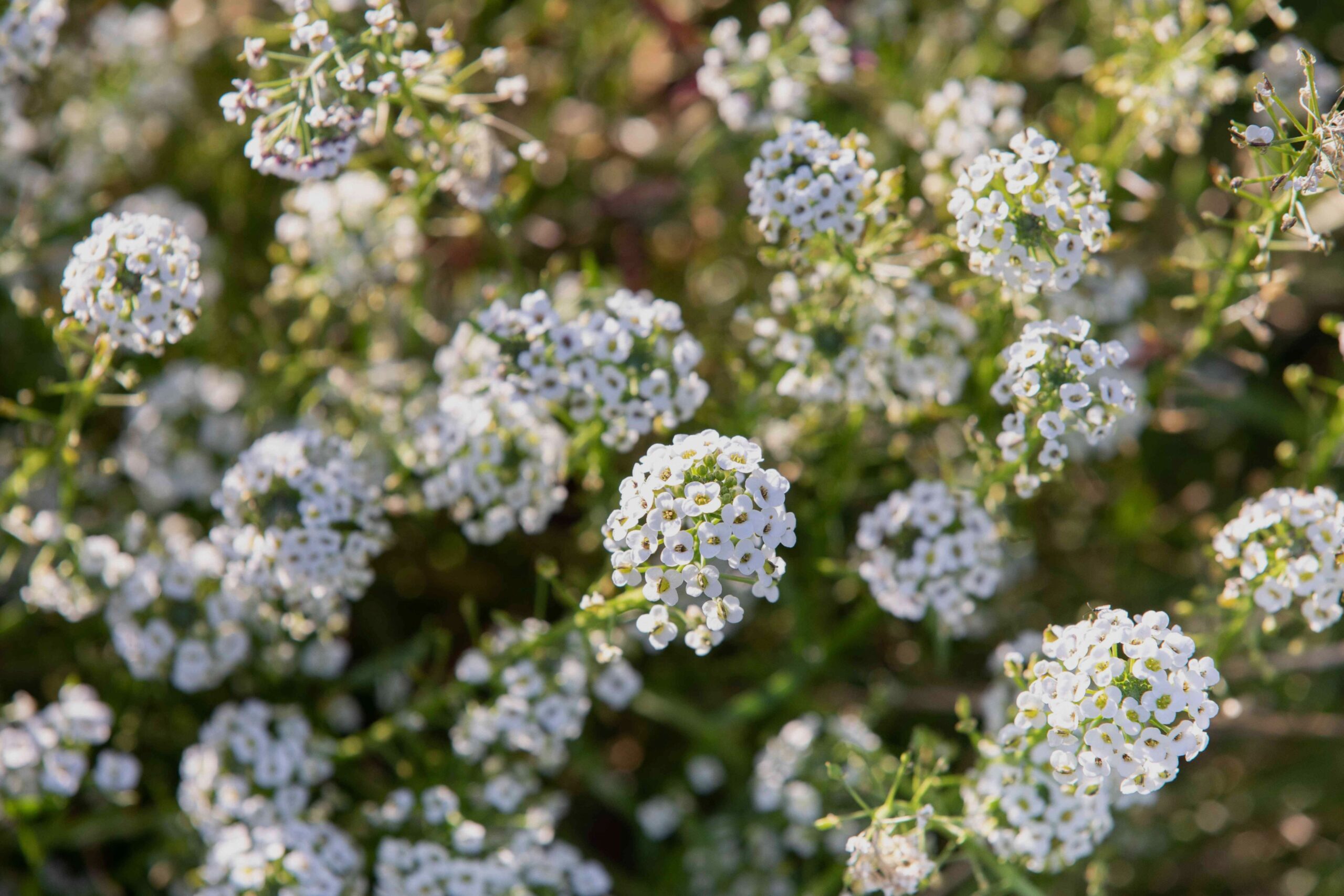
Sweet alyssum (Lobularia maritimma )
Smells like honey. Zones 7-11, grown as annuals elsewhere. Seed it in spring. It pops up in a week. Trim it when it goes bare. It fills the gaps between rocks perfectly. Bees love the smell. So do I.
Herbs and dual-purpose
Thyme (Thymus vulgaris )
Cook it. Walk on it. Let it flower. Zones 2-10. Full sun is mandatory. Purple blooms return if you cut the spent flowers. It attracts bees. It repels deer. It is a plant and a spice cabinet. Why have both when you can have one?
Dianthus (Dianthus spp. )
Called “pinks.” Look like cut with pinking shears. Zones 3-9. Clove scent. Long blooming. Many types. Biennials, annuals, perennials. Toxic if ingested in quantity. Pollinators find it easy. So does the gardener.
The faceless faces
Pansy (Viola x wittrookiana )
Inkblot faces. Zones 4-8. Hate summer heat. They bolt in June. Keep them wet and shaded. Or plant in spring and fall and throw them away in August. That’s how many of us do it. Deer like them.
Creeping phlox (Phlox stoloniferraa )
Purple mats. Zones 5-9. They last. From spring until frost. Trim the dead flowers to keep them clean. Hummingbirds visit. Deer don’t. It spreads wide, 9-18 inches. Not tall, though. 6 inches max.
Lily of the valley (Convallaria majalism )
Bells. White. Fragrant. Dangerous. Highly toxic. Zones 3-8 shade. They spread via runners. Aggressively. If you don’t dig them every few years, they own your garden. Beautiful trap. Use with extreme caution around pets.
Egyptian star clusters (Pentas lanceolatma )
Five-pointed stars. Zones 10-11 perennials. Elsewhere, annuals. Pentas is easier to search for. They bloom for months. Deadhead for more. They need heat. Cold stops them.
Ground cover contenders
Primrose (Primula spp. )
Stalks with umbrels. Zones 3-8 color bombs in spring. They rot in wet shade if they don’t drain. Keep the soil moist but not swampy. They divide every three years. If not, the center dies. Zones 9+ are too hot. They need chill to bloom.
Blue Chip butterfly bush (Buddleia davidia ‘Blue Chip’)
Sterile cultivar. Good choice. The regular bush goes everywhere and stays everywhere. This one stays put. 3 feet max. Blue/purple clusters. Butterflies come running. Zones 5-9 containers or corners.
The tough stuff
Lavender (Lavendula spp. )
Let it dry out. Seriously. Water too much and roots rot. Full sun. Zones 5-9 spikes of purple. Smell great. Look good. Drought tolerant. Grow slowly. Maybe a few inches a year. Patience is the soil additive.
Butterfly weed (Asclepias tuberousa )
Monarch food plant. Do not spray. Aphids will come. Let them. Monarchs eat the aphids or lay eggs on the weed. Zones 3-9 native. Orange/yellow tops. Tough roots. Drought resistant once started. Toxic if eaten? Check local specs, but generally leave for butterflies.
Lantana (Lantana camerma )
Citrus smell. Rough leaves. Zones 7-11 invasive in FL/HI/AZ. Elsewhere an annual. Multi-color flowers change hue. Butterflies flock here. Toxic to cats especially. Handle with gloves if you have sensitive skin. Or kids.
Yarrow (Achillea millefoluum )
Flat tops. Feathery leaves. Zones 3-9 invasive tendency. Deadhead strictly if you hate spreading. Pollinator magnet. Drought hardy after year one. It grows tall. 3 feet. It gets wild. Like it should.
That is the list. Or part of it.
Gardening isn’t about following a list. It’s about seeing a crack in the pavement and knowing which tiny life will thrive there.
What about you? Do you grow the small ones or the loud ones?
Maybe just start with thyme. Everyone likes thyme.