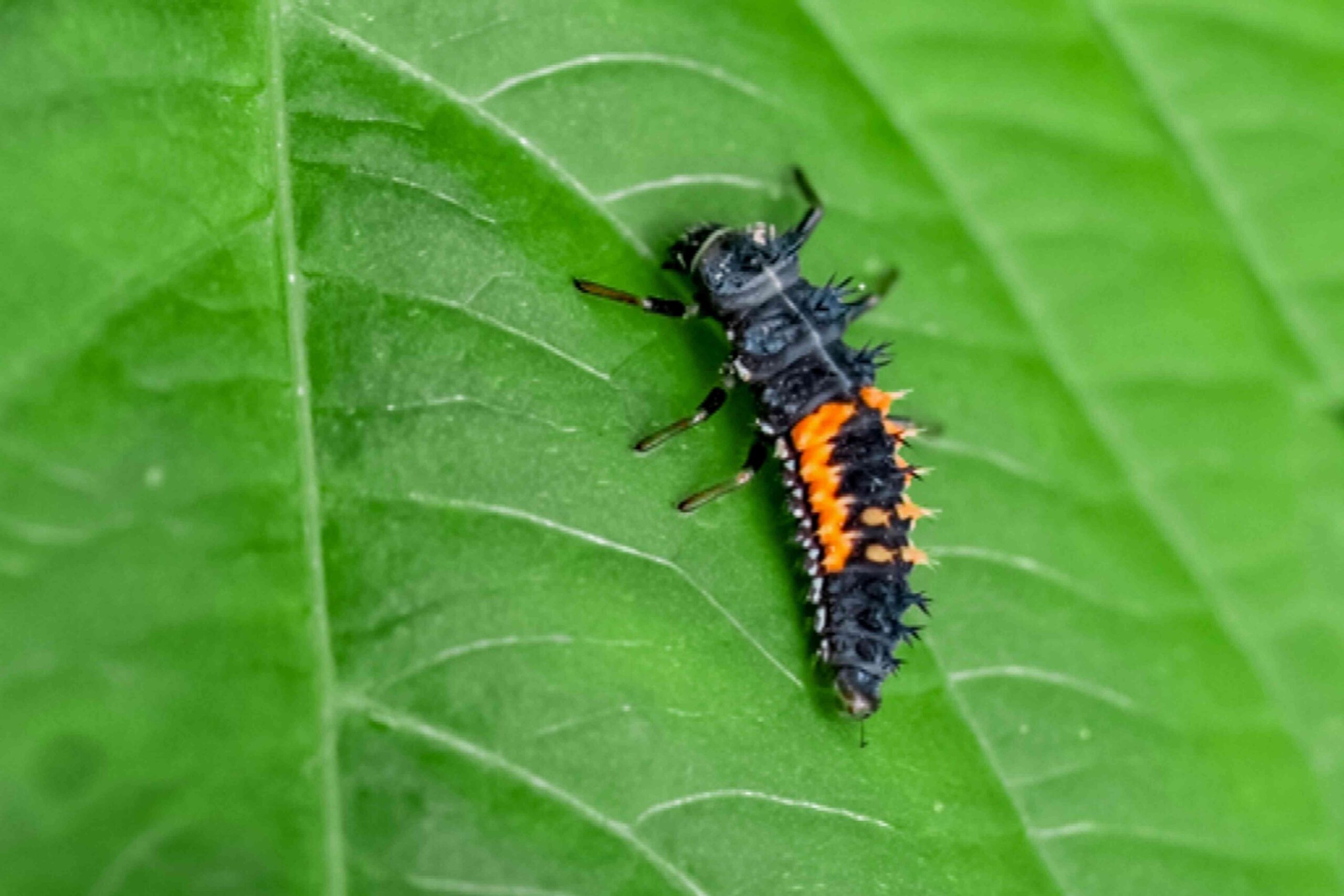
They look like tiny alligators. Black. Spiky. Sinister. Most gardeners freak out.
They shouldn’t.
These weird, armored blobs are ladybug larvae. And they are the good guys. The heavy lifters. The ones doing the dirty work while the adult beetles just sit there looking cute on leaves.
If you spot one, do not squish it. In fact, you might want to buy a whole colony of them. They are the fastest way to wipe out a pest invasion without spraying chemicals that burn your plants—and your conscience.
How They Actually Live
It is not a linear process. It is a metamorphosis. Complete. Radical.
Four stages. No skipping steps.
Eggs : She lays them under a leaf. Five eggs. Or thirty. The smart ones? They mix in a few infertile ones too. Why? Because when the hatchlings break free, the infertile shells become their first meal. Nature is brutal like that. Efficient, though.
Larvae : They hatch in two days. Or ten. Hard to guess. They start eating immediately. They don’t ask questions. They molt four times. Each time, they get bigger and hungrier.
Pupae : Here comes the pause. They glue themselves to a leaf and do nothing for seven to fifteen days. No moving. No eating. Just becoming. It feels like nothing is happening, but everything is changing.
Adults : They pop out soft. Pale yellow. Vulnerable. Predators see this color and say “easy meal.” But wait. The shell hardens. Turns that iconic vibrant red. Only then are they ready for business.
For the seven-spotted lady beetle—just one of over 5,000 kinds—it takes about six weeks from egg to red-dotted icon.
What the Beast Actually Looks Like
Forget the round, polka-dot ball in your head.
The larva is long. Maybe half an inch. It has spines. It is black with marks of red or orange or white. It looks prehistoric.
It’s basically a walking stomach with legs.
It spends its whole life eating other bugs until it stops being a gator and becomes a beetle.
Behavior Matters
They overwinter as adults. They hide. Tree bark. Shingles. Your attic, maybe.
Then spring hits.
They wake up. They feed. They lay eggs. One female can drop a thousand eggs in three months. Think about that number. A thousand potential predators, born in your yard.
The minute the larvae crawl out, they hunt. They do not pause to admire the view. They hunt aphids. Primarily aphids. About four hundred of them before they turn into pupae. Four. Hundred.
If there are no aphids? Fine. They eat soft scale. Whiteflies. Thrips. Spider mites. They will eat whatever is soft. They are not picky eaters. They are desperate eaters.
Do they eat plants? Not really. But they do like pollen. So if you want to keep them around, plant the stuff they like.
- Angelica
- Calendula
- Coreopsis
- Dill
- Marigolds
- Yarrow
These are the pit stops. The coffee shops for ladybugs.
Don’t Kill the Good Guys
Here is the trap. You have an infestation. You see the gator-things. You panic. You spray.
Bad move.
You kill the pests, sure. But you kill the eaters too. And then who catches the next wave of bugs? The wind?
If there isn’t enough food, the adult ladybugs will fly away. They leave. But the larvae? They can’t fly yet. They are stuck. They stay and eat what they can find until they transform.
So keep the water shallow. Change it often. Stagnant water means mosquitoes, and you didn’t sign up for that.
Want more of them? Buy them. Companies ship beneficial insects now. They usually send native species, like the convergent lady beetle (Hippodamia convergens ).
Is it instant magic? No. They will boost the population fast, but they will leave if the garden isn’t hospitable. You still need to do the work. You still need the flowers. You still need to leave the pesticide in the garage.
It’s a partnership, not a product.
Which Species Actually Help
There are thousands of species. Most aren’t helpful. Some are pests themselves.
Focus on the natives. The ones that know the local terrain. The convergent lady beetle is a staple for good reason. It survives winter. It feeds well. It stays longer.
Introduced species often die out when the weather changes. They aren’t built for the climate. Stick with what already knows how to survive.
Because here is the truth.
The red-and-black bug is famous. The black-and-red larva is ignored.
But the larva does the heavy lifting. It eats the bugs. It saves the plants. Then it turns into something beautiful and flies away, looking for the next place to breed.
You see the pretty ladybug on your shoulder. You smile. You don’t know what it ate to get there. You don’t care.
But maybe you should.