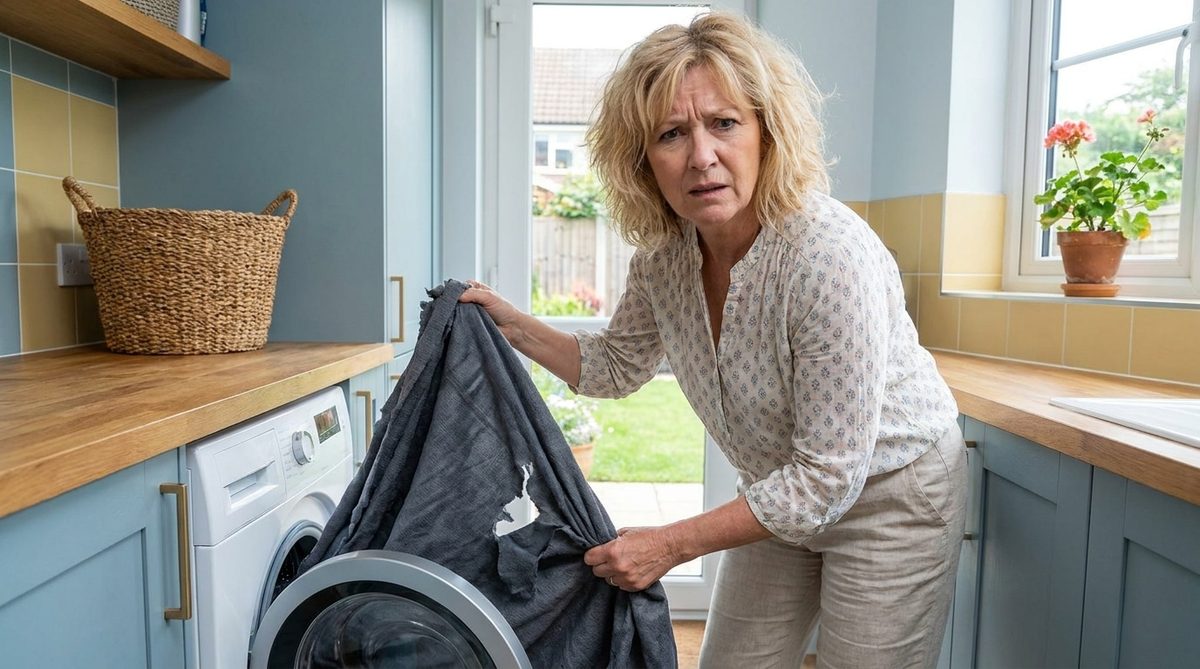
Your blackout curtains are working overtime this summer. They block the light, protect your privacy, and, most importantly, keep the heat out. But there is a common mistake people make when washing them that ruins their effectiveness. You might think throwing them in with the rest of your laundry is fine. It isn’t.
A high spin cycle or hot water can destroy the fabric’s internal structure. The lining heats up from the inside out. You won’t see it at first glance. The damage happens silently. The trap lies in a little-known fact: these aren’t simple textiles. They are technical fabrics with a fragile protective layer. Preserving their cooling power requires small, essential adjustments. You need to stay cool this summer.
Why Heat and Spinning Destroy Thermal Coatings
A blackout curtain’s performance relies heavily on a thermal coating applied to the back. This layer feels slightly rubbery to the touch. It acts as a barrier. It slows down solar rays and limits temperature spikes behind the glass. The problem is that this coating is not a standard fabric.
Hot water makes it soften. It can become sticky. Then it dries out and stiffens. In some cases, it micro-cracks. The blackout effect might remain, but the “shield” weakens. Your room absorbs heat faster.
The other enemy is less intuitive: high-speed spinning. A drum spinning at full speed twists the curtain. It creates deep folds and tension. This weakens the coated layer. The coating can peel off in spots. It loses flexibility. It wears out prematurely, especially at the hems and folds.
The result appears when the sun hits hard. The curtain looks like it’s working. The air inside feels heavier. It feels like the window is radiating more heat. In short, dirt doesn’t ruin the efficiency. Aggressive washing does.
The Correct Wash: 30°C Max and Gentle Settings
To preserve performance, follow one rule: 30°C maximum. Use a delicate or “synthetics gentle” cycle. Going above that increases the risk for the thermal layer, especially if the curtain is double-lined.
Check the label before you start. Does the manufacturer recommend cold water? Identify the coated side (usually the back). Fold the curtain loosely. Do not pack it tight. Leave space in the drum to limit friction. If possible, wash it alone or with a few light items. This reduces abrasion.
For detergent, focus on gentleness. A standard liquid detergent works fine. Avoid harsh powders. Skip the strong stain removers. Do not use bleach. These chemicals attack the polymer backing. Fabric softener isn’t necessary either. It can leave a film that affects the fabric’s breathability.
Rinse well. Don’t leave residue. Most importantly, keep the spin cycle low. You don’t need the curtain bone-dry. You need to preserve its integrity.
Key washing guidelines :
- Temperature : 30°C max, or cold if recommended
- Cycle : Delicate or gentle synthetics
- Spin : As low as possible, or none
- Products : Mild liquid detergent, no bleach
Drying, Ironing, and Daily Maintenance
Once washed, treat your blackout curtains with the same care. A tumble dryer is often discouraged. Heat and prolonged friction damage the coating. It can deform or become brittle.
Air drying is the best option. Reshape the curtain slightly. Hang it on the rod if possible (protect the floor). Or use a wide drying rack to avoid tight folds. The flatter the curtain dries, the less stress on the coating. If the inside is damp, air it out regularly. This speeds up drying without overheating the material.
Ironing requires caution. Never expose the coated side to direct heat. If you need to smooth it out, iron the right side only. Use low heat. Place a thin cloth (a pressing cloth) between the iron and the fabric. Steam helps, but don’t hold it in one spot for long.
Daily maintenance is the most cost-effective strategy. Dust regularly. Use a vacuum with a low-power fabric attachment or a soft brush. Treat small stains locally with a damp cloth. You don’t need to wash the whole curtain every time.
The fewer times you wash them, the longer the coating keeps its properties. Your interior stays pleasant when the sun beats down.
A thermal blackout curtain doesn’t need a “heavy duty” wash. It needs smart care : 30°C max, gentle spin, simple products, and air drying. These adjustments seem minor. They make the difference between a textile that truly protects and one that just blocks light. Next time the machine runs, ask yourself: Is the goal to go fast… or to keep the house cooler, longer?