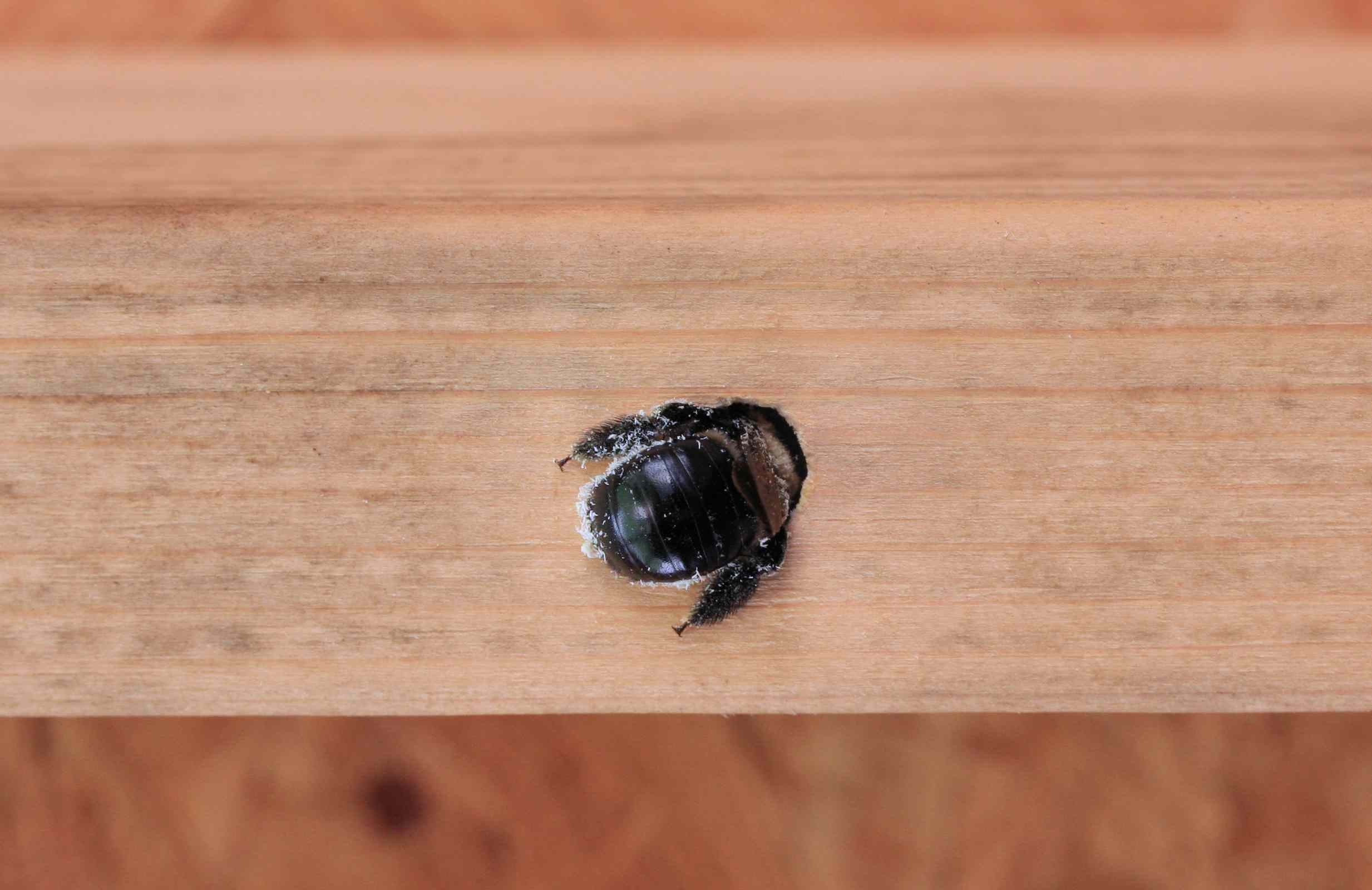
You see a big bee hovering near your deck. It looks like a bumblebee. It’s not. It’s a carpenter bee. And it’s drilling into your siding.
Most people ignore them until they see the sawdust. That pile of fine wood dust isn’t just mess. It’s a tunnel. And inside that tunnel, eggs are waiting. If you’ve got these carpenter bees on your property, you need to move fast. They aren’t just noisy. They eat wood.
Here is how you identify the damage and kick them out.
How to tell if those bees are actually carpenter bees
People confuse them with bumblebees all the time. Both show up in spring. Both are big. But look closer.
Carpenter bees have smooth, shiny abdomens. They lack the fuzzy hair bumblebees have. Their heads are black. Their bodies might shine black, green, or even purple under the sun.
The female does the work. She drills a perfectly round hole. It’s usually about half an inch wide. She does this in untreated wood. It takes her just a few hours. The male? He hovers nearby. He guards the entrance. He doesn’t sting. He’s actually kind of harmless, but he’s annoying.
Why do they care about your wood? They need a place to lay eggs. Once she picks a spot, she’ll come back. Every year. The same hole. The same wood. Over time, those tunnels weaken the structure. Moisture gets in. Rot starts. A pretty deck becomes a structural hazard.
How to kill carpenter bees effectively
You notice sawdust. You hear a low humming from your fence. What now?
Insecticides work best.
This is the hard truth. Natural remedies are nice. They rarely stop an active infestation. Use a commercial insecticide labeled for bees and wasps. Liquid or dust works. Wait until dusk. The bees are inside the tunnels then. Spray directly into the hole. This ensures the chemical touches the bee. If you spray during the day, you’re just making an angry bee.
Try a carpenter bee trap.
You can buy these online. It’s a wooden box with half-inch holes. A glass bottle hangs at the bottom. You hang it near where you see activity. The bees fly in through the holes. They see light in the bottle. They fly in and can’t get out. You catch them. Then you decide whether to relocate them or let them die. It’s humane, mostly. But it takes patience.
Essential oils are a deterrent, not a killer.
People swear by citrus, peppermint, or eucalyptus. Mix a few drops in water. Spray your wood. It smells nice to you. It smells terrible to them. But here’s the catch: it won’t kill the ones already inside. It just stops new ones from moving in. It’s a shield, not a sword.
Replace the wood entirely.
If the infestation is bad, chemicals won’t fix it. The tunnels are already there. The structural integrity is gone. Remove the rotting wood. Replace it with treated lumber. Or use aluminum, or composite materials. Bees hate those surfaces. You break the cycle. They won’t come back to a spot that’s been removed.
Why prevention matters more than reaction
You got rid of the bees. Good job. But they’ll be back. Next year. Same time. Same deck.
How do you stop the cycle?
- Paint or stain your wood. Carpenter bees prefer raw, untreated wood. A thick layer of paint seals the pores. It makes the wood uninviting.
- Use treated wood for new projects. Pressure-treated lumber has chemicals in it. Bees avoid it.
- Fill old holes. If you have old entry points, seal them up with wood putty or steel wool. Then paint over it.
- Inspect early. Check your fascia boards. Look at window frames. A tiny hole today is a structural failure tomorrow.
Don’t wait for the sawdust. The damage happens before you notice it. Treat your wood. Watch for the shiny bees. And if you see one drilling, act immediately.