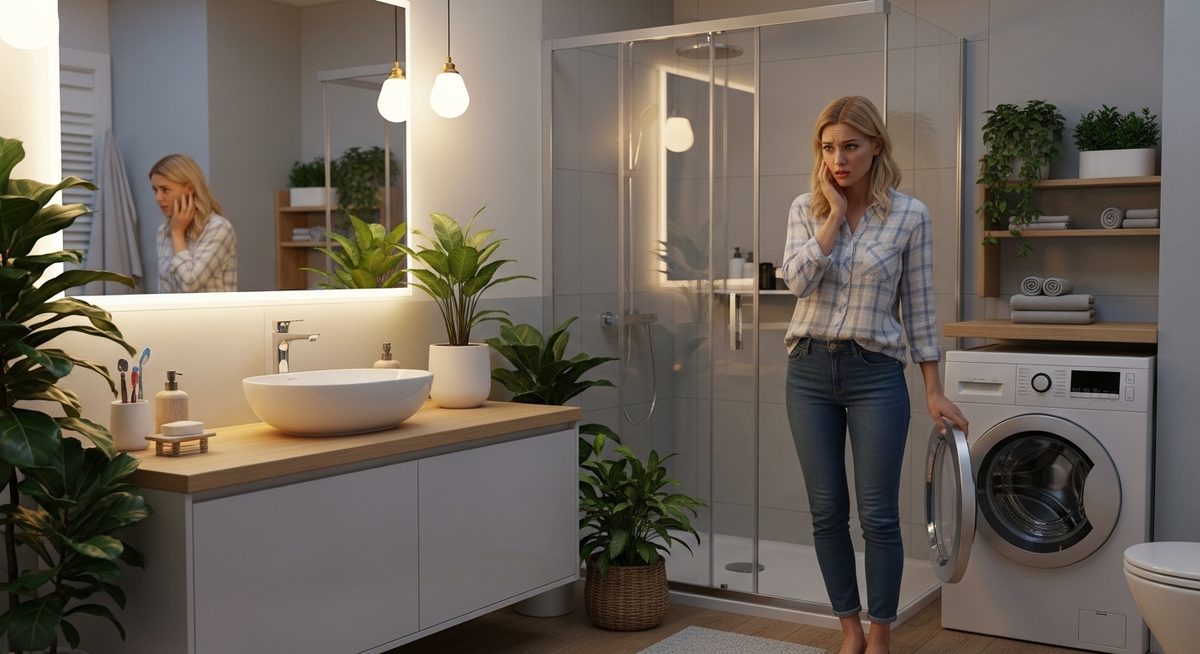
You probably put your washer there because it made sense. Water in, water out, done. It saves a trip to the laundry room and keeps dirty clothes close. But as the seasons turn and humidity creeps up in your home, that convenient spot turns into a ticking time bomb.
The bathroom is the wettest room in your house. Not by a little. By a lot. Especially if your ventilation is mediocre or you keep the door shut to keep the heat in.
How Constant Moisture Damages Electrical Components
That humidity does not stay on the tile. It travels. It settles in the gaps of your appliance. It works its way into the electrical connections.
Think about a cycle in November. The room is already damp. You run a hot wash. The air gets saturated. Your washer’s internal wiring and plug points sit in a cloud of moisture, day after day.
This is not just about corrosion. It is about safety.
Water and electricity do not mix. In a bathroom, they are forced to.
When moisture accumulates on electrical parts, it can cause short circuits. It can trigger breaker trips. In the worst case, it can start a fire. Most homeowners do not think about this until the smoke detector goes off.
Why “Convenient” Is Not the Same as Safe
You might think a small dehumidifier fixes the problem. It helps. It does not solve it. The issue is structural. The bathroom is designed to handle water in the tub and shower, not to protect sensitive electronics.
If you are considering moving your machine, look at these factors:
- Ventilation: Does the bathroom have an exhaust fan that runs during and after your wash?
- Distance from water sources: Is the machine away from the shower or bathtub?
- Electrical protection: Does the outlet have a Ground Fault Circuit Interrupter (GFCI)?
If the answer to any of these is “no,” you are taking a risk.
Where Should You Actually Put It?
The laundry room. The garage. A utility closet. Somewhere dry.
Yes, it means carrying a basket of clothes down the hall. Yes, it is less convenient than having it right next to the shower. But convenience should not cost you a fire.
If your home does not have a dedicated laundry area, look for a dry corner. A hallway closet with proper ventilation can work. A garage space with a GFCI outlet is better than a damp bathroom.
What to Check Before You Move It
If you decide to relocate your machine, do not just drag it to a new spot.
- Check the floor level. Washing machines need a solid, level surface. Uneven floors cause vibration and damage the drum.
- Verify the plumbing. You need both water supply lines and a drain hose connection. Make sure the drain is at the correct height to prevent backflow.
- Test the electrical connection. Use a GFCI outlet. Test the breaker. Ensure there is no moisture near the plug.
- Secure the hoses. Tight connections prevent leaks. Leaks in a closet are easier to spot and fix than leaks under a bathroom floor.
The move takes a few hours. It requires a screwdriver, a wrench, and maybe a helper
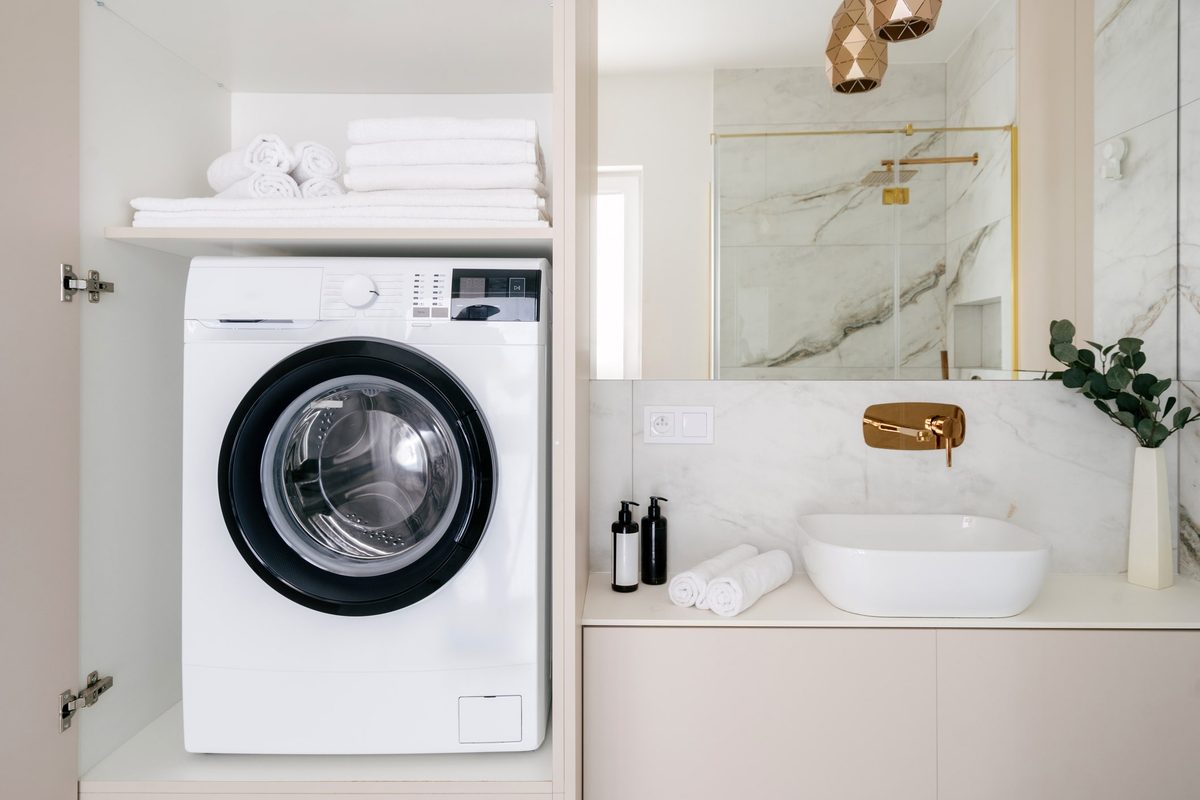
Stop: Why Your Washing Machine Near the Shower is a Fire Hazard
You pushed it into the corner because it made sense. Water lines are there. The drain is nearby. You slap down a rubber mat, maybe plug in a power strip, and call it done.
It feels secure. It isn’t.
The closer you get to the shower, the faster your appliance dies. And in some cases, it becomes dangerous. Condensation accumulates inside the electronic components every single time you take a hot shower. The wall sockets, even the ones you think are “safe” because they’re raised, sit right in the splash zone. Autumn makes this worse. Windows stay closed. Air gets thick. That moisture doesn’t just sit on the mirror. It seeps into the machine’s guts.
How Moisture Actually Destroys Your Washing Machine
Have you ever noticed a strange smell? Or a breaker tripping for no obvious reason? That’s the warning.
Water and electricity don’t mix. They never have. But in a cramped bathroom, they are forced to share a small space. Here is what happens when you ignore the risk:
- Corrosion sets in. The constant cycle of hot steam and cool autumn walls creates condensation. This water eats away at the internal circuits.
- Short circuits become likely. Even a tiny leak or heavy splashing can bridge a connection. The result? A shock hazard or a short that fries the board.
- Mold moves to your clothes. The humidity doesn’t just rot the machine. It breeds mold inside the drum and on the rubber seals. You wash your shirts, and they come out with that musty, damp smell. You breathe that air in every time you open the door.
You are not saving space by taking this risk. You are just trading a few square feet of floor for a potential electrical fire or a $200 repair bill that could have been avoided.
Which Practical Fixes Protect Your Safety Without Renovation
You don’t need to move the whole apartment. You don’t need to build a new room. You just need to stop letting the machine sit in a wet pool of humidity.
1. Isolate the electrical connection
Get a dedicated differential circuit breaker (disjoncteur différentiel) for the bathroom. This separates the bathroom circuit from the rest of the house. If there is a fault, that specific breaker trips, protecting the rest of your wiring. It is a cheap insurance policy.
2. Lift the machine off the floor
Don’t let it sit directly on the tile. Condensation pools underneath. Buy a thick rubber base or a dedicated platform. It stops the moisture from wicking up into the bottom of the cabinet. It also dampens the vibration, which keeps your floors from cracking over time.
3. Control the air, not just the water
A dehumidifier is your friend here. Run it after every wash. Or, if you can, keep a window cracked open for 15-20 minutes after the cycle. The goal is to dry the air before the next shower session. If the air is dry, the machine stays dry.
4. Protect the outlets
Check your wall sockets. Are they standard? Switch to IP-rated outlets or install splash-proof covers. Ensure the power cord is routed high on the wall, away from the showerhead’s range. If you use a power strip, keep it elevated and away from any water source. Never plug a power strip into a bathroom outlet that isn’t explicitly rated for wet environments.
“The peace of mind you think you’re saving space for is actually just delaying a breakdown.”
The temptation to keep everything close is strong. But water and electricity are a bad pair, especially when the air is already heavy with autumn moisture. Adjust the setup. Add the breaker. Lift the unit. Dry the room.
Your clothes will smell cleaner. Your house will be safer. And the machine might actually last through the winter.