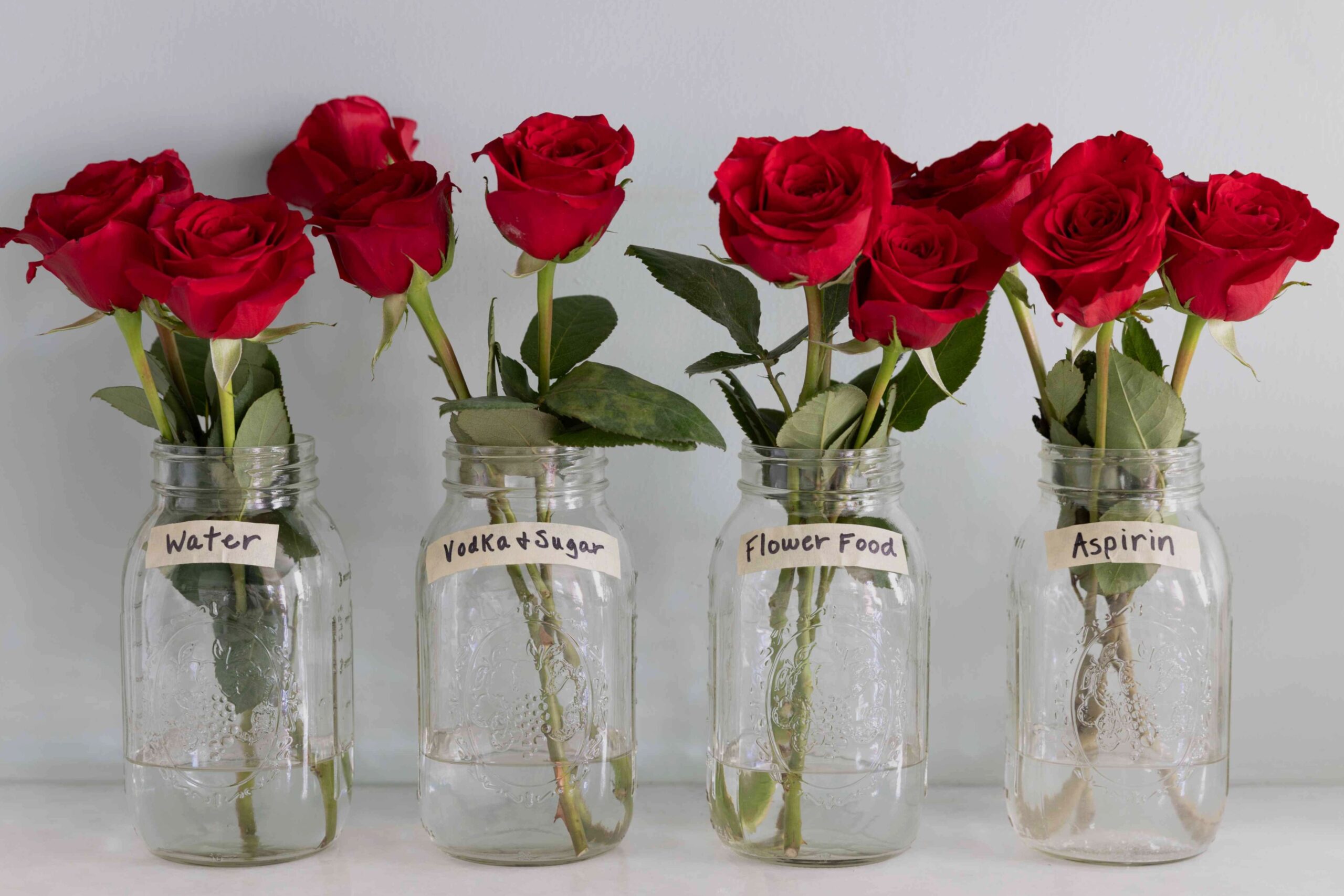
A recent experiment tested three common methods for prolonging the life of cut roses: a vodka and sugar solution, commercial flower food, and crushed aspirin in water. The results were definitive: flower food consistently outperformed the other methods, keeping roses fresher for longer.
The experiment involved dividing a single bouquet of red roses into four vases: a control group with plain water, one with vodka and sugar, another with flower food, and a final one with crushed aspirin. Each vase received the same amount of water (8 fluid ounces) and the solutions were refreshed every two days, along with a fresh angled cut to the stems.
Vodka and Sugar: A Failed Cocktail
The hypothesis behind the vodka and sugar method was that vodka would inhibit bacterial growth while sugar would provide nutrients. However, the roses in this vase began drooping by day three, with stems yellowing and leaves drying out. By day seven, these roses were the first to fully wilt. The experimenter noted that excess sugar may have promoted bacterial growth instead of preventing it, while the vodka concentration might have been off.
Aspirin’s Bitter Outcome
The aspirin method aimed to mimic the acidic soil conditions that roses thrive in. However, the roses in this vase also deteriorated rapidly, showing yellowing at the base and crispy leaves. The experimenter theorizes that using too much aspirin (two baby tablets for 8 ounces of water) may have created an overly acidic environment, harming the flowers rather than helping them.
Flower Food: The Consistent Winner
The roses treated with commercial flower food consistently showed the best results. By day three, they were still thriving, with blooms opening further and stems remaining upright. By day seven, these roses looked almost as vibrant as when they were first cut, and were still alive and well after an additional day.
The Science Behind the Success
Flower food’s effectiveness lies in its balanced formula: bleach to keep water clean, citric acid to maintain pH levels, and sugar for nutrients. This combination creates an ideal environment for cut flowers to survive longer. Ethylene, a gas produced by wilting flowers, can accelerate the deterioration of nearby blooms, so separating deteriorating roses is important.
The experiment concluded that commercial flower food is the most reliable method for extending the lifespan of cut roses. The DIY hacks, while theoretically sound, require precise measurements that are difficult to achieve without scientific tools.