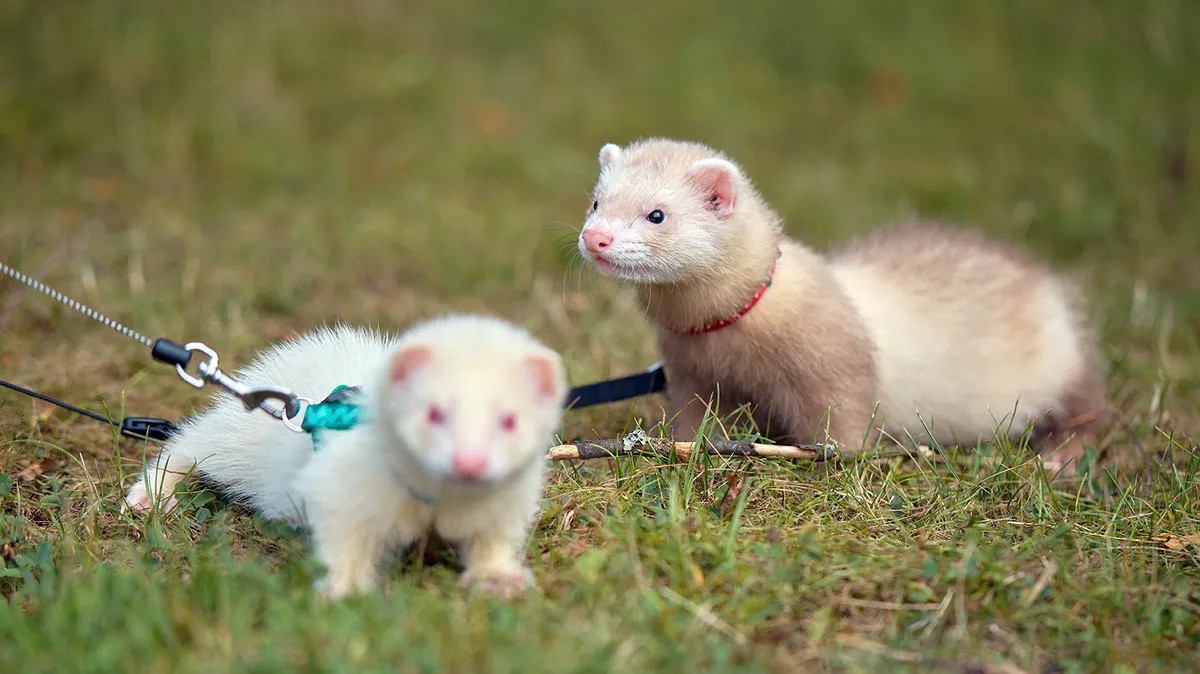
The English language is full of quirks, and collective animal nouns – like a “murder” of crows or a “pride” of lions – are among the most peculiar. But perhaps the oddest of them all is a “business” of ferrets. This seemingly random term has a surprising history rooted in medieval hunting culture, linguistic errors, and a touch of playful absurdity.
The Origins of “Business”
The term likely evolved from “busyness,” a reference to ferrets’ energetic and frantic movements. These small predators, closely related to weasels, are known for darting around with restless curiosity. Over time, through either mishearing or careless transcription, “busyness” morphed into “business,” and the name stuck.
The practice of assigning colorful collective nouns to animals dates back to the Middle Ages, when hunting was a popular pastime among the nobility. These lists were less about scientific accuracy and more about elaborate wordplay and social status. Scholars like John Hodgkin have noted that many of these names may have emerged from errors or simple mistakes rather than widespread usage.
Ferrets and Their Role in Hunting
Ferrets have been used by humans for centuries to hunt rabbits. Their slender bodies allow them to chase prey into burrows, making them valuable partners in wildlife management. Some believe the term “business” might have stemmed from their efficient, methodical manner of flushing rabbits from underground. The idea is that they approach their task with a focused, almost professional, demeanor.
However, ferrets don’t naturally gather in large packs like wolves or lions. The term “business” doesn’t reflect any real behavioral trait but rather a whimsical linguistic accident. A litter of kittens makes biological sense. A business of ferrets is pure wordplay.
Modern Usage and Scientific Accuracy
Today, scientists rarely use these collective nouns in formal research. Instead of describing a “business” attacking prey, researchers simply refer to a group of animals or a pack if the species truly hunts together. Yet, expressions like “a murder of crows” or “a pack of wolves” persist in casual speech, adding color to everyday language.
The enduring appeal of these terms lies in their unexpectedness and playful quality. They remind us that language is not always logical but often shaped by history, error, and imagination.
The “business” of ferrets may not have a practical purpose, but it stands as a curious reminder of how language evolves and how even the most random phrases can become ingrained in our culture.