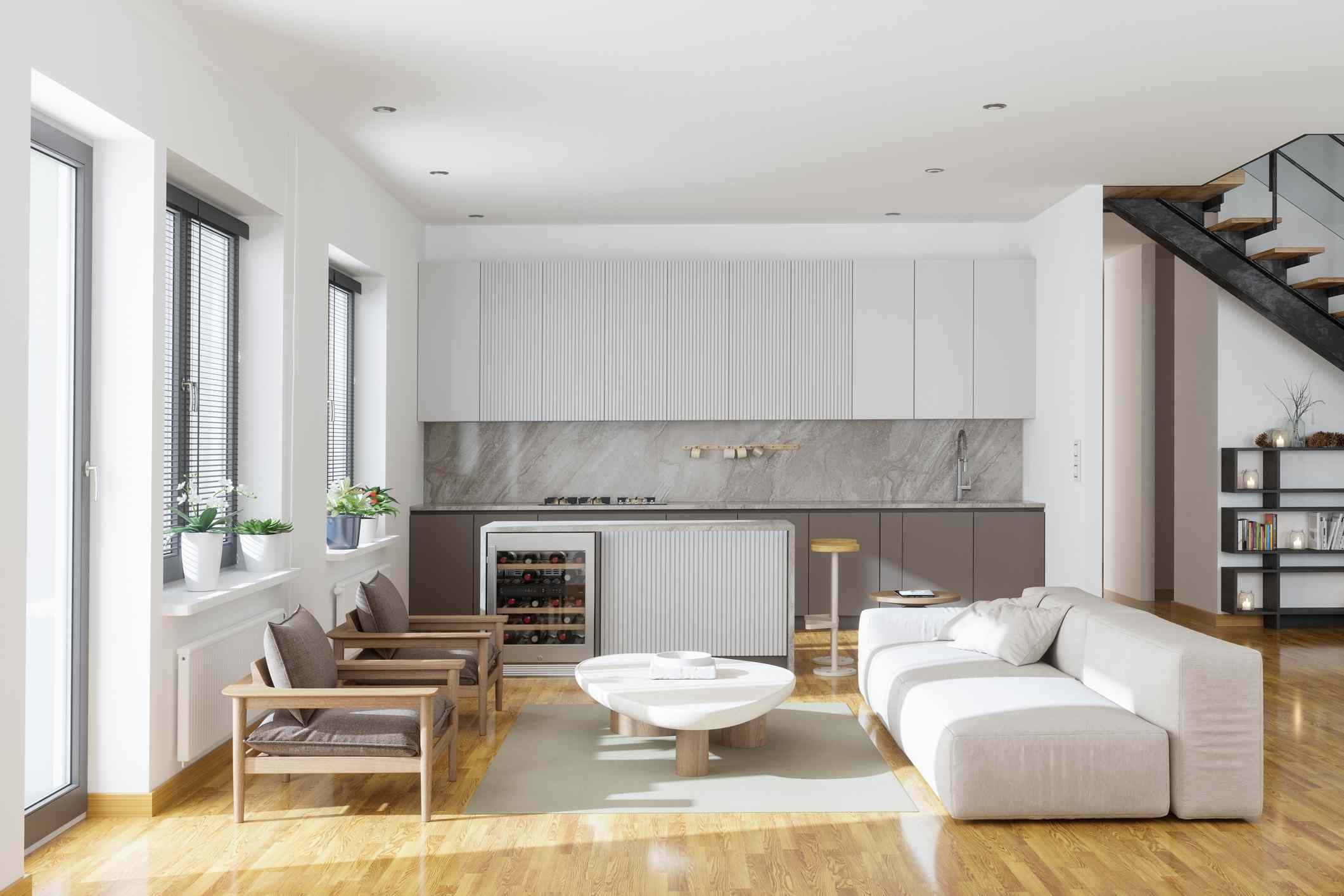
For two decades, open-plan living rooms have dominated home design. Now, a quiet but significant shift is underway. Homeowners and designers alike are reassessing the benefits of sprawling, undivided spaces in favor of more intentional, segmented layouts. This isn’t necessarily a rejection of openness, but a move toward balance —a desire for connection and privacy within the home.
The Evolving Appeal of Openness
The era of the completely open floor plan may be waning, but not disappearing. Designer Melanie Grabarkiewicz explains that while homeowners still enjoy the social aspect of open living, there’s a growing need for functional separation. The pandemic likely accelerated this trend, as many homes doubled as offices, classrooms, and entertainment hubs—a challenge for undivided spaces.
The key isn’t eliminating openness entirely, but refining how it’s expressed. People still want to be near each other while engaging in different activities, but they also need dedicated zones for work, relaxation, or focused tasks.
Three Layout Trends Reshaping the Modern Home
Designers are seeing three distinct approaches emerge as alternatives to the all-out open concept:
1. Historic Re-Imagining: Adapting Existing Structures
Many homeowners are choosing to work with existing architecture instead of tearing it down for a modern open floor plan. This is particularly common in homes built between the early 1900s and 1970s. Formal dining rooms are often repurposed into home offices or flexible multi-use spaces, while additions create better flow between living areas without sacrificing defined rooms. This approach prioritizes functionality and preservation over radical reconstruction.
2. Subtle Definition: Zoning Within Openness
The expansive, high-ceilinged open layouts of the 1990s are giving way to a more nuanced approach. Designers are now using ceiling treatments, furniture placement, and area rugs to visually define zones within an open space. This creates a sense of structure and warmth without the harsh boundaries of walls. The goal is to create distinct areas that serve different purposes while maintaining overall flow.
3. Well-Defined Zones: Blurring Boundaries, Not Eliminating Them
Many homeowners are craving living spaces that offer both connection and mental clarity. Having a kitchen, living room, and workspace all flow into each other can make it hard to switch between activities. The solution? Creating soft divides through built-ins, partial walls, or shared functional areas like beverage stations. This maintains visual continuity while establishing clear boundaries between zones.
“The best designs today balance flow with structure, creating movement that naturally guides you through the home while maintaining synergy from one area to the next,” says interior designer Jeff Andrews.
Ultimately, the shift away from all-out open plans isn’t about regression—it’s about adapting to changing needs. The modern homeowner wants homes that are both connected and functional, spaces that support a range of activities without sacrificing comfort or clarity. This means moving beyond the extremes and embracing a more balanced approach to interior design.