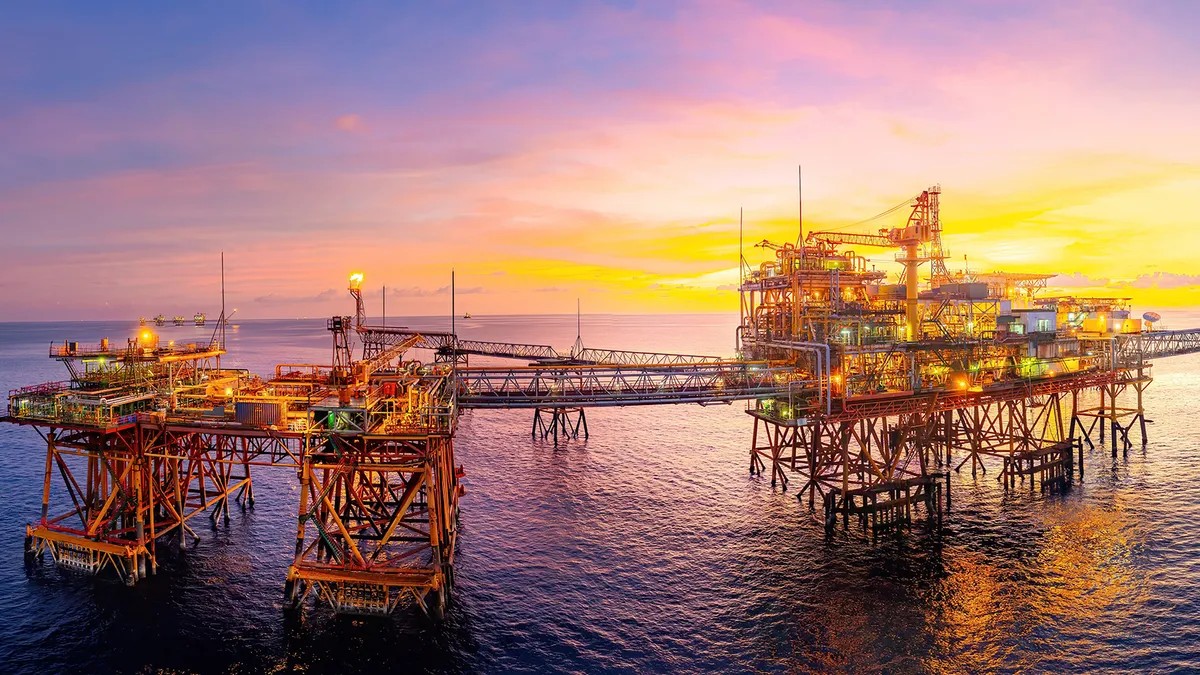
Offshore drilling is one of the most demanding feats of modern engineering. To extract crude oil and natural gas from beneath the ocean floor, companies must deploy massive structures capable of functioning as self-contained industrial cities. These platforms are not merely tools for extraction; they are complex ecosystems that integrate drilling equipment, processing plants, storage facilities, and living quarters for hundreds of workers—all while battling extreme weather and immense water pressure.
As energy demands push drilling into deeper and more hostile environments, the scale and sophistication of these structures continue to reach unprecedented heights.
The Heavyweights: Massive Gravity-Based Structures
Some of the largest platforms are designed to sit directly on the seabed, using sheer mass to remain stable. These are often referred to as gravity-based structures (GBS).
- The Hibernia Platform (North Atlantic): Located off the coast of Newfoundland, Hibernia is a titan of engineering. Its total gross weight exceeds 1.1 million tons. Because it operates in a region prone to massive icebergs, it was specifically designed to withstand a direct impact from a 1-million-ton iceberg without sustaining damage.
- The Berkut Platform (Russian Pacific): Situated near Sakhalin Island, this platform is a marvel of subarctic engineering. Weighing over 200,000 tons, it was built to withstand temperatures as low as -44°C and waves reaching 18 meters. It is a product of significant international collaboration, involving major players from Russia, the US, Japan, and India.
The Vertical Titans: Height and Depth
While some platforms focus on weight, others are defined by their incredible vertical scale—either rising high above the water or reaching deep into the abyss.
Record-Breaking Heights
- Troll A (North Sea): This Norwegian platform is legendary for its scale. A significant portion of its structure—over 369 meters—sits below sea level, making it one of the tallest structures ever moved by human hands.
- Petronius (Gulf of Mexico): Standing approximately 2,001 feet from the ocean floor, Petronius is one of the world’s tallest free-standing structures. Interestingly, it is designed with a degree of flexibility, allowing it to sway slightly with tidal currents to prevent structural failure during storms.
Deep-Water Pioneers
As shallow-water reserves deplete, the industry has moved into much deeper territory, requiring specialized “spar-type” or floating systems.
- Perdido (Gulf of Mexico): Operated by Shell, this is the world’s deepest spar-type platform, operating in waters roughly 8,000 feet deep. It connects to subsea wells that reach depths of nearly 10,000 feet below the surface.
- Stones (Gulf of Mexico): Currently representing the frontier of deep-sea extraction, the Stones floating production system operates in water depths of approximately 9,500 feet. As a floating production, storage, and offloading (FPSO) facility, it processes and stores oil directly at sea before transport.
Life on an Offshore “City”
Operating these rigs is a logistical challenge that requires constant support. Because they are located far from land, these platforms function as isolated communities:
– Living Quarters: Hundreds of workers live on-site in dedicated housing.
– Logistics: Supply vessels and helicopters are the only lifelines for food, equipment, and personnel rotation.
– Self-Sufficiency: Platforms like the Olympus (Mars B) in the Gulf of Mexico act as massive production hubs, capable of producing 100,000 barrels of oil equivalent per day and supporting nearly 200 full-time offshore jobs.
The Future of Extraction
The trend in offshore drilling is moving toward increased automation and subsea integration. Rather than relying solely on massive surface platforms, much of the modern industry is shifting toward subsea installations. These underwater systems connect wells directly to platforms or floating units, allowing companies to tap into resources in even deeper, more remote locations with greater efficiency.
These offshore platforms represent the intersection of extreme environmental challenges and human ingenuity, serving as the essential, albeit massive, pillars of global energy production.