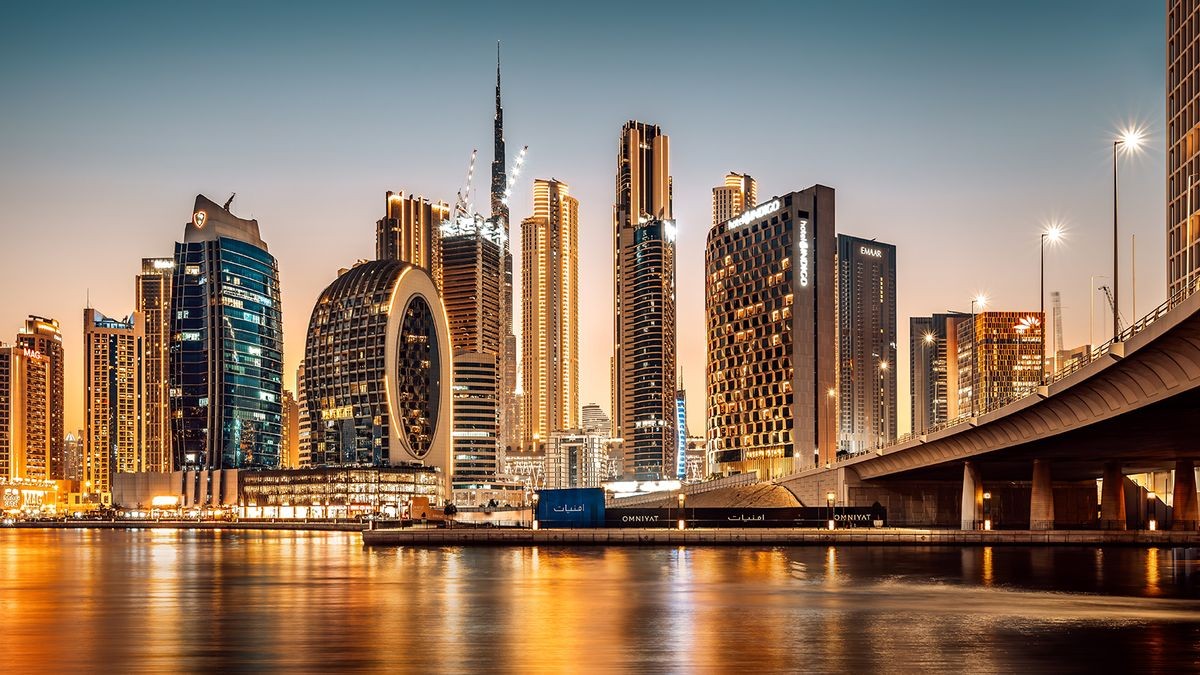
Dubai’s transformation from a modest trading post to a global metropolis is one of the most striking economic stories of recent decades. The city’s skyscrapers, luxury hotels, and sprawling malls beg the question: how did Dubai become so wealthy? The answer lies not in oil alone, but in strategic diversification and forward-thinking policies.
From Oil to Diversification
While oil played a crucial initial role – with exports beginning in 1969 – Dubai’s leaders quickly understood the finite nature of fossil fuels. Unlike neighboring Abu Dhabi, which possesses vast oil reserves, Dubai’s own production was limited. This realization prompted the emirate to reinvest early oil revenues into infrastructure, trade, and services to ensure long-term economic sustainability. By 2024, mining and quarrying accounted for just 1.4% of Dubai’s GDP, underscoring the success of this shift.
A Strategic Geographic Hub
Dubai’s strategic location on the Arabian Peninsula, bridging Europe, Africa, and Asia, has been fundamental to its growth. The city functions as a key global trade hub, connecting markets across continents. This is supported by world-class logistics infrastructure, including Jebel Ali Port – one of the busiest harbors globally – and Dubai International Airport, the world’s busiest airport for international passengers. These transport networks facilitate the seamless movement of goods, travelers, and companies, making Dubai an essential link in international supply chains.
Business-Friendly Policies and Free Zones
One of Dubai’s most potent advantages is its aggressively business-friendly environment. The government established 27 specialized “free zones” offering significant incentives to international companies. These include 100% foreign ownership, zero corporate tax on qualifying income, and streamlined regulations. Zones like Jebel Ali Free Zone, Dubai Internet City, and Dubai Media City attract investors, banks, and multinational corporations, which utilize Dubai as a regional headquarters. These zones currently contribute 38% of the city’s GDP and employ over 500,000 workers.
Tourism and Real Estate
Tourism is another pillar of Dubai’s economy. In 2023, the city welcomed 17.15 million international visitors, drawn by luxury shopping, beaches, and iconic landmarks such as the Burj Khalifa, Burj Al Arab, and Palm Jumeirah. Tourism-related spending reached US$32.1 billion in 2019, contributing 11.5% to Dubai’s GDP.
Property investment is equally significant, attracting billions in foreign capital annually, with rental yields of 5-8% exceeding global averages. This influx of investment further fuels economic growth.
Financial Hub and Future Industries
Dubai has also emerged as a major financial hub for the Middle East, hosting global banks and investment firms within the Dubai International Financial Centre (DIFC). The government is further investing in future industries: artificial intelligence, fintech, blockchain, and smart infrastructure, through initiatives like the Dubai Digital Authority and the Dubai 2040 Urban Master Plan. These strategies aim to double the city’s economy within the next decade.
Dubai’s transformation from a pearl diving town to a global economic powerhouse demonstrates the power of strategic planning, infrastructure investment, and diversification. The city’s success serves as a model for nations seeking to build sustainable, long-term prosperity.