Spring is coming. The balcony is also colorful. Cutting dead flowers by hand feels like the most natural thing in the world. This seems like a neat gesture. Little maintenance.
However, it can damage your plants.
Pulling the petals or stem to “clean” the containers will not help. It destroys the reason for the garden’s success. Do you think you have room for new growth? Rather, you are destroying the future.
Here we will tell you in detail why hands are the enemy of geraniums and how to fix it.
Invisible damage in hand-pinching
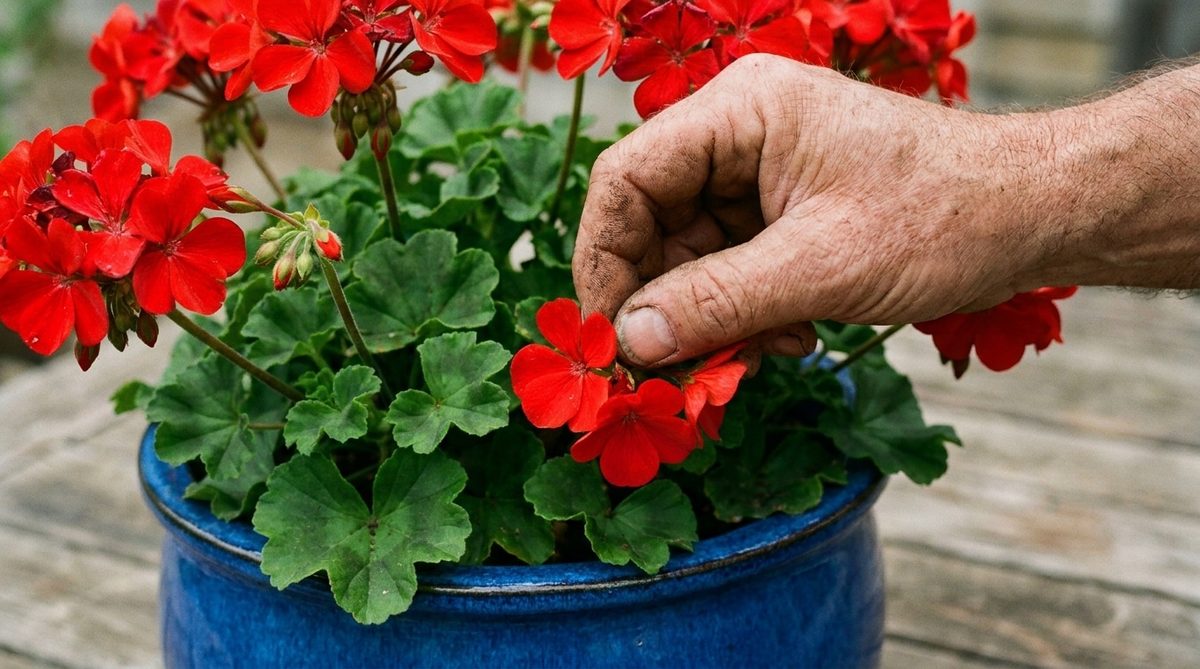
You may already be doing it. I see withered flowers. Grasp the floral stem between your thumb and forefinger and pull. Pretty simple, right?
Wrong.
Manual pulling does more than just remove dead tissue. You decide to rip out the healthy cells that are responsible for the next bloom. Spring sap should flow freely. Your brute force creates a bottleneck.
The damage also occurs below the surface.
Pulling the stem can cause small tears in the stem. This small tear is an open wound. They are gateways to weakness and disease. Plants must now divert their precious energy from flowering to emergency repairs.
“As the plant tries to heal these physical wounds, the growth of new flowers stagnates. The flower pot stagnates.”
Your geranium is not lazy. It is stressed. It works to fill the gaps created by the fingers. result? Flowers rarely bloom. The stems are weak. Even if you water regularly, your plant looks tired.
Why tears prevent growth
Plant physiology is merciless.
Rough, irregular tear from fingernails can interfere with internal channels that carry sap. The dirty wound dried in a chaotic manner. It can scar and eventually block the base of the branch.
Hydration becomes irregular. Water cannot move efficiently up the stem. Without constant hydration, you cannot grow large, long-lasting flowers. You get small and medium clusters.
There are also physiological shock.
When part of the plant is torn off, it sends a distress signal to the rest of the branch system. Plants sense the attacks. It instinctively prevents the growth of side reserves. The buds next to the tear do not grow. They atrophy.
That’s why the containers looks thin. This is not your soil. This is your technique.
Pro Secret: Precision Tools
Home gardeners guess. Professionals measure.
The secret to continuous explosion of color is not your willpower. This is your tool.
You will need a flower pincher or precise pruning shears.
These are not suitable for heavy pruning. These are small, sharp tools designed for fine cuts. Make a surgical incision. It is not crushed. There are no tears. It’s just a clean separation.
The sharp blades slide through plant fibers without damaging them. Keep the internal channels open. The plant closes the wound evenly and quickly. Don’t waste energy on healing. puts that energy into new buds.
This way you maintain maximum vitality when the temperature rises.
Technique: Cut above the node
The right tools are half the battle. The angle is important.
It’s not just about shortening the stem. Cut the entire branch with intention.
Locate the base of the damaged stem. Find where it intersects the main axis or sub-branch. This intersection is strategic. Here the future flower sleep.
Cutting here serves two purposes.
- Remove dead weight.
- Prevents seed formation.
The production of seeds consumes a lot of energy. If you leave the stem behind, the plant will think its job is done. It tries to produce seeds. By cutting the node, you force the plant to try again.
Fast healing angle
After determining the cut point, tilt the blade slightly.
Cut diagonally.
In this way, rainwater and water from the watering can drain away from the wound. Prevents stagnation. Water collected in fresh cuts can cause rot.
Clean, angled wounds heal quickly. Protects the vascular system.
During the warm season, repeat this process every 2-3 days. You will see a shift. Growth changes from ordinary to cascading colors.
The difference between a messy pot and a masterpiece is a sharp blade and the discipline to let it do the work. Fingers are blunt instruments. They are not part of the cutting zone.
you have scissors made the cuts. What now? Accurate pruning is only half the battle. If you want these spectacular blooms to really happen, you need to support the cut with daily care. It’s not just about cutting. It’s all about concentrating the sap in the important areas.
Don’t ruin your plants by ignoring the basics. The goal is simple. It’s about allowing the plant to focus its energy on the new growth you’ve encouraged.
Don’t waste energy on dead leaves
The first step in recovery is manual cleaning. Look at the base of the plant. Those yellowing leaves? They’re not just ugly. They are drains.
They take resources from the system without giving anything back. Separate them. Do it by hand. This will take a few seconds. Save energy for plant roots and shoots.
Precise water and feed
Once the debris is gone, the tank must be refilled. But don’t drown.
Regular watering is key. The soil must be kept fresh. Damp. Never soggy. If you water too much after pruning, the roots you want to protect can rot. Maintains constant moisture.
Feed it too. Weekly doses of special fertilizers can work wonders here. This is a quick boost. It tells the plant that it is time to grow. Don’t think too much about the dosage. Stick to a weekly rhythm. Observe the results.
Summer return
Respect the cycle and observe the changes. Factories stopped wasting energy on maintenance and started bringing new products to the market.
A few weeks have passed. The outline of the garden changes. You may even wonder if the plant has mutated into a different variety. The colors have multiplied. The density increases.
This is not magic. It’s just good horticulture.
Why you need this routine for your balcony
This is not about creating the perfect sterile garden. It’s about energy. With the right tools, like clean pruning shears and flower clips, you can do more than just clean up. You give the plants a reason to reach for sunlight.
The rewards are immediate. Vibrant. intense.
Take 5 minutes a week for these small actions. The prize is a living bouquet that refuses to quit. All summer long. There is no downtime.
Ready to start using this tool? The season is moving quickly. Don’t stopped at the cut and waste other flowers.