


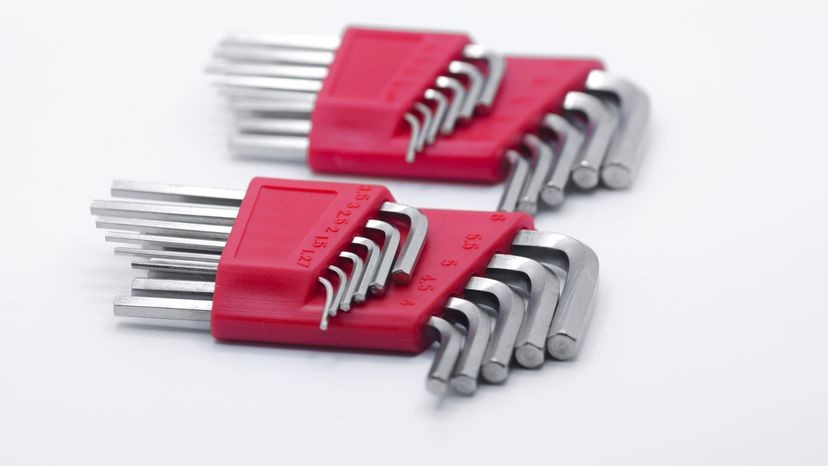
You’ve probably found an allen wrench in a box of flat-pack furniture before. It’s that little L-shaped metal stick that makes assembling a bookshelf or desk surprisingly satisfying—or frustratingly difficult if you don’t know what you’re doing.
They go by different names. You might call them allen keys, hex keys, or just L-wrenches. They are ubiquitous in DIY and home renovation because they drive hex socket screws. These screws are common in everything from bicycle repairs to kitchen cabinet hinges.
But here is the problem. If you grab the wrong size, you will strip the head. That is a nightmare. You cannot tighten the screw, and you often have to drill it out. To avoid that, you need to understand allen wrench sizes and how to match them correctly.
The Anatomy of the Hex Key
The tool gets its name from the Allen Manufacturing Company, which invented it. They designed it to be small, durable, and made of alloy steel.
The shape is simple. A long arm for leverage and a short arm for turning. Both ends usually hold the same size, though some specialized tools vary.
Why do we still use them? Because they allow you to apply high torque in tight spaces. A standard screwdriver tip can slip out. An allen wrench sits inside the bolt head. It grips all six sides. This reduces the chance of slippage.
Most hardware stores sell sets. You want one that covers both SAE (standard) and metric sizes. Why? Because global manufacturing mixes standards. If you only have metric keys, you are stuck when you encounter an American-made appliance.
Decoding the Size Chart
You cannot just guess. You need the right fit.
Manufacturers provide charts, but you can memorize the most common ranges. A complete set includes sizes from tiny 0.7 mm up to a hefty 12.7 mm.
Here is the breakdown you will likely encounter in a standard box:
- 0.7 mm
- 0.9 mm
- 1.2 mm (3/64 inch)
- 1.3 mm
- 1.5 mm
- 1.6 mm (1/16 inch)
- 2.0 mm (5/64 inch)
- 2.4 mm (3/32 inch)
- 2.5 mm
- 2.8 mm (7/64 inch)
- 3.0 mm
- 3.2 mm (1/8 inch)
- 3.5 mm (9/64 inch)
- 4.0 mm (5/32 inch)
- 4.4 mm (11/64 inch)
- 4.5 mm
- 4.8 mm (3/16 inch)
- 5.0 mm
- 5.2 mm (13/64 inch)
- 5.5 mm (7/32 inch)
- 6.0 mm (15/64 inch)
- 6.4 mm (1/4 inch)
- 7.0 mm
- 8.0 mm (5/16 inch)
- 9.0 mm
- 9.5 mm (3/8 inch)
- 10.0 mm
- 12.7 mm (1/2 inch)
Notice the pattern. The metric sizes often have no direct SAE equivalent. The SAE sizes are fractions. The metric are decimals. Confusing 5 mm with 5.5 mm is a common mistake. The tool will fit loosely. It will wobble. It will fail.
Preventing Stripped Screws
Smaller allen keys are fragile. They snap. They bend. They round out the screw head if you apply too much pressure.
To use them effectively, follow a strict protocol


