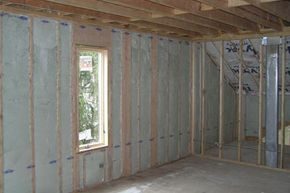
It is not a Greek carrier. It is a cement-based insulation product that changed the game when it was patented in 1984. The core ingredient is magnesium oxide (MgO). This stuff comes straight from seawater. Don’t let the simplicity fool you. Making it is complicated. First, seawater reacts with quarried limestone. This creates milk of magnesia. The chemical formula is Mg(OH)2. Then you split that into MgO and water using electrolysis. It takes a lot of energy. But only about 30 percent of the energy needed to make traditional Portland cement. That cement? It spits out just over a ton of CO2 for every ton produced.
The Chemistry of Cooling
Once you have isolated the MgO, you add a little bit more. Ceramic talc. Water. A foaming agent. That is it. The mixture looks like shaving cream when it is ready to spray. It is essentially a cement foam. It traps thousands of tiny air bubbles.
Think about what happens if you just leave air in your walls. It moves. It flows. It transfers heat through convection. But Air Krete traps that air in millions of individual chambers. This forces heat to transfer through conduction. That is a much slower process. It does the same job as fiberglass insulation. But there are no carcinogenic microfibers. No formaldehyde used in the manufacturing. And you get more insulating power per inch of thickness. It also blocks fire. Keeps pests out. Dampens noise.
Installation Nuances for DIYers
You spray it into walls. Similar to modern foaming insulations. But there are key differences if you are retrofitting an existing home. You can spray Air Krete from the exterior. This reduces damage to finished interior spaces. You do not have to tear down drywall.
However, you cannot just wing this. Installation requires specific training. You need a lattice-like chicken wire to support the material while it dries. If you install it through existing house wrap, you must cut slits in the wrap. This helps it dry properly.
Once it is dry, it stays put. It does not expand or shrink. Other spray-in-place insulations often need room to expand. Or they settle over time, requiring another round of insulation. Air Krete dries to a rigid foam. It traps those millions of air bubbles inside. Done right, it keeps unwanted temperatures out. It keeps your desired climate inside.
“It traps air in millions of individual chambers, forcing heat to transfer through conduction.”
The Audubon Society uses it. Biosphere II uses it. Al Gore has used it in construction projects. It works.
For more details on green building products, check the links on the next page.