
Cleaning gutters is the chore everyone dreads. It involves ladders, soggy leaves, and a healthy dose of vertigo. But skipping it is a mistake that costs more than just your time.
Rain gutters are not decorative. They are infrastructure. Their job is simple: catch roof runoff and move it away from your foundation. If they are blocked, water pools. It seeps into the basement. It rots the fascia board. In extreme cases, the weight of wet debris tears the entire system off your house.
Experts recommend cleaning twice a year. Spring and fall. If you have heavy tree coverage, do it more. Most homeowners don’t. The debris is out of sight. It’s easy to ignore until the damage is done.
The solution? Install gutter guards. These devices keep leaves out while letting rain in. They protect your biggest investment with minimal effort. But choosing the right one matters. You don’t want to spend a fortune on a product that still clogs.
Three Styles of Protection
Not all guards work the same way. There are three main types. Mesh screens. Filters that sit inside the gutter. Surface tension units that sit on top. Your choice depends on your budget and how much maintenance you want to avoid.
Mesh and Plastic Screens
These are the middle-of-the-road options. They are more expensive than simple filters but cheaper than high-tech surface tension systems.
Cheap plastic screens cost as little as 50 cents per foot. You can install them yourself. But they often fail. Small debris gets through. You will still need to clean them periodically.
High-end mesh systems like Gutterglove use perforated aluminum and fine stainless steel mesh. The mesh is glued into grooves. It filters debris while allowing free flow. There is also an “Icebreaker” model that helps melt snow.
The cost is steep. Installation can reach $2,500. Is it worth it? Only if you have significant budget and want a near-perfect solution.
Inside-the-Gutter Filters
For tighter budgets, look at internal filters. These sit inside the existing channel.
The Gutter Brush is a cylinder-shaped bristle brush. It acts as a filter. Water flows through the bristles. Leaves stay on top. It costs as little as $3.25 per foot. Installation is simple. You likely won’t need a pro.
The Gutter Filler is similar. It uses porous polyurethane. It claims to handle rain up to 10 times your normal rainfall rate. It is slightly more expensive than the brush but still affordable.
These options are DIY-friendly. They require no major tools. Just a ladder and your hands.
Surface Tension Guards
Surface tension units sit over the gutter. They use physics to separate water from debris.
The Gutter Helmet is the most famous design. Created by MIT alum Bob Demartini in the 1960s, it features a curved shape. Leaves slide off the roof. Water flows through a narrow slit.
The slit is three-eighths of an inch wide. That’s about 0.95 centimeters. The surface is textured. Rain clings to it as it flows down. Debris washes away.
This system is effective but complex. Installation is harder than dropping a brush in. Costs vary widely based on roof complexity.
Why Maintenance Matters
Ignoring gutters is worse than having none. Clogged gutters cause water damage to the roof and fascia. They add weight. They rot.
Most homeowners skip this step. The debris is invisible from the ground. It becomes a problem only when water backs up.
Gutter guards reduce the frequency of cleaning. They don’t eliminate it entirely. Mesh screens still catch small bits. Brushes accumulate dust.
You still need to check them. Inspect after storms. Clear large debris by hand. But the heavy lifting is done.
The Real Cost of Inaction
Water damage is expensive. A flooded basement can cost tens of thousands to fix. Rotting fascia requires carpentry work. Peeling paint on the siding is a sign of overflow.
Gutter guards are insurance. They cost hundreds or thousands upfront. They prevent thousands in damage later.
For the budget-conscious, the Gutter Brush or Gutter Filler are smart starts. They are easy to install. They work for most standard gutters.
For those who want a set-it-and-forget-it system, high-end mesh or surface tension units justify the price. But even they require occasional inspection.
There is no perfect guard. Every system has flaws. Debris can still get in. Ice can form.
But a clogged gutter is a guarantee of damage. A guard is a hedge against it.
Start with the basics. Clean the existing gutters. See what kind of debris you get. Is it pine needles? Hard to filter. Large leaves? Easier.
Then pick a guard that matches your debris profile. Don’t overspend on features you don’t need. Don’t underspend on quality that fails in a storm.
Your house is your biggest asset. Protect it. Start from the top down.
You can’t install a filter on a dirty pipe. Same rule applies to gutters. Before you even think about cutting mesh or snapping on plastic inserts, the existing system needs to be pristine.
Start with the basics. Clear out every leaf, pine needle, and bit of sludge. If you skip this, the guards won’t sit flush. Debris creates gaps. Gaps let bugs in. You want a clean slate.
Then, test the flow. This isn’t optional. Take a garden hose to the roof. Run water through the downspouts. Watch where it goes. If it spills over the edge or leaks into your fascia, fix that first. Gutter guards won’t hide bad drainage. They’ll just make it a harder problem to find later.
Measuring and Cutting for a Precise Fit
Estimates are for contractors. You need exact numbers. Grab the tape measure. Measure the length of every gutter run. Do it twice. Trust me.
If you order guards that are too long, you’re stuck cutting them. If you order them too short, you have ugly gaps. Neither looks good.
The tools you need depend on the material.
– Plastic guards usually cut with a hacksaw or utility knife.
– Metal mesh might need metal snips.
– Rigid aluminum or composite panels often require a circular saw or chop saw.
Check the manufacturer’s specs. They’ll tell you the best blade type. Use a fine-tooth blade for metal to avoid jagged edges.
Gathering the Right Tools
Don’t show up with just a ladder. Look at the installation method before you buy.
Snap-in designs are lazy-friendly. You might not need a drill. You just slide them in.
Over-the-edge systems are different. These often need screws, nails, or pop rivets. You’ll need a power drill. You’ll need a screwdriver bit. You might need a rivet gun.
Custom-fit systems like the Gutterglove use a different approach. They tuck under the roof shingles. The back side doesn’t need screws. The shingles hold it down. But the front edge? That needs to be screwed to the gutter lip. You’ll also need finger fasteners to connect sections. And a thin strip of caulk to seal the joints.
Read the instructions. All of them. If it says “professional installation only,” believe it. Some systems are so specific that DIY attempts will void the warranty or just fail.
Compatibility and Warranty Checks
Don’t assume your gutters are standard. They’re not.
Check the profile. Is it K-style? Half-round? Box gutter? The guard must match the shape. A K-style guard won’t snap onto a half-round gutter. It’ll look silly and fall off.
Check the warranty. Some companies offer lifetime coverage. Others give you five years. Read the fine print. Does it cover clogging? Does it cover rust?
Check the return policy. If the guards don’t fit, can you send them back? Shipping heavy metal mesh is expensive. Make sure you’re not stuck with a box of unusable aluminum.
Safety First: No Shortcuts
You are working on a ladder. At least twenty feet high.
This isn’t a game.
Use a stabilizer. A ladder stand-off keeps the ladder away from the gutters. It prevents damage to the gutter and gives you a wider base. Don’t lean your ladder against the gutter itself. You’ll crush it.
Have a spotter. If you’re alone, call someone. Tell them what you’re doing. If you slip, you want eyes on you.
Wear gloves. Metal edges are sharp. Plastic burrs can cut. Don’t bleed on your new guards.
Use a harness if the roof is steep. Seriously. Most DIYers skip this. Don’t. Gravity doesn’t care about your confidence.
If the roof is too steep or the gutters are too high, hire it out. There is no shame in paying someone to do the dangerous part. Your health is worth more than the $200 you might save.
Choosing Your Installation Path
You have three main paths here.
- Snap-on guards. Fast. Cheap. Easy. But they often leave gaps. Wind can blow debris under them. They’re good for low-maintenance homes, not perfect ones.
- In-gutter inserts. These sit inside the channel. You measure, cut, and drop them in. No screws. No roof work. But you still have to clean the gutters first. And they can be tricky to remove if they clog.
- High-tech mesh (like Gutterglove). Professional look. Best performance. But installation is complex. You need to work under shingles. You need caulk. You need precision. If you mess up the front-edge screwing, water will back up under the guard.
Ask yourself: How much effort do I want to put in? How much do I care about preventing every single leaf?
If you want zero leaves in the gutter, go high-tech. Accept the complexity.
If you just want to stop the big branches from clogging the downspout, snap-ons might be enough.
Whatever you choose, measure twice. Cut once. Install carefully.
The roof doesn’t forgive mistakes.
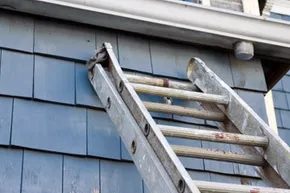

People install gutter guards for plenty of reasons. Efficiency. Aesthetics. Maybe they just hate the sound of water dripping on their head. But safety should be near the top of that list.
Consider the alternative. If you have clogged gutters, the cleanup process is straightforward in theory and dangerous in practice. You get on a ladder. You climb up. You dig out sludge. Or you pay someone else to do it. Either way, you are elevated and unstable.
Gutter guards reduce this risk by keeping debris out of the channel in the first place. Properly functioning guards mean fewer trips to the roof. Ideally, you never have to climb up to clean a clog again.
But here is the catch. You still need to install them. And installation requires a ladder.
Ladder falls cause thousands of injuries every year. Most of these incidents are preventable. The single best way to avoid a fall is simple: don’t work alone.
When you are on a ladder—whether you are clearing leaves or installing gutter guards —have at least one other person nearby. They can hand you tools. They can hold a hose. They can stabilize the base if things get shaky. Having a spotter changes the entire dynamic of the job.
Tools and Tactics for Safer Ladder Work
If you are cleaning gutters before the guards go on, use an S-hook to secure your bucket.
This might sound minor. It isn’t.
Hanging the bucket on the hook keeps it off your shoulder or hip. Your hands remain free to grab leaves or debris. More importantly, it prevents the bucket from swinging or shifting your center of gravity. A swinging bucket is a fast track to losing your balance.
Ladder Placement Matters
How you position the ladder is just as critical as who is holding it.
Do not lean the ladder directly against your gutters.
The weight of the ladder combined with your body mass can dent aluminum. It can crack vinyl. It can even pull the fascia board away from the house if the gutters are already compromised.
If you cannot find a solid spot to rest the ladder on the roofline or siding without touching the gutters, change your equipment.
Use an A-frame ladder. These stand independently. They do not lean. They do not put pressure on the eaves. Alternatively, use an articulating ladder. These multi-position ladders can bend over the gutter. They rest on the roof or a stable surface while the top section clears the obstruction.
The Repetitive Danger
You will have to move the ladder. You need to work your way around the perimeter of the house.
Every time you move it, you reset the risk.
Don’t get complacent. Don’t skip the setup. Check the level. Ensure the feet are on solid ground. Engage the locks.
It takes time. It feels tedious. But it is the difference between finishing the job and walking away with a broken ankle.
“When you’re working on gutters, you’ll find yourself getting down and moving the ladder as you circumnavigate the house, don’t forget to safely set up the ladder each time you move it!”
Install the guards. Secure them properly. Let them do the heavy lifting for years to