


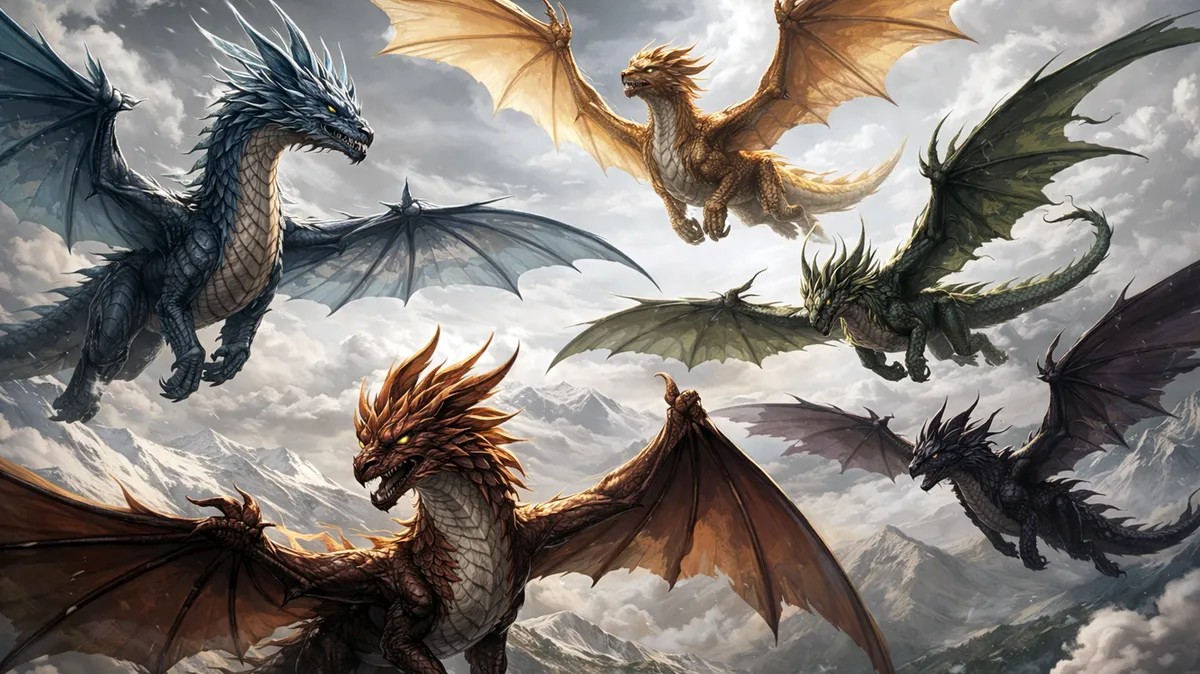
Dragons are fixtures in mythology, literature, and games worldwide, so it’s natural to ask: what is a group of dragons called? Unlike real animals with fixed collective nouns, dragons being fictional creatures allow for linguistic creativity. There’s no single “correct” answer; instead, several terms are commonly used, each evoking different aspects of these legendary beasts.
The Most Common Term: A Flight of Dragons
The most widely accepted collective noun for dragons is a flight. This term highlights their defining ability: to fly. When dragons move together, their coordinated wings create a powerful, unified force, making “flight” applicable whether describing young dragons learning to soar, reinforcements arriving, or an army preparing for war. Its versatility is why it has become so popular among writers and fans.
Beyond Flight: Broods, Clans, and More
Another frequently used term is brood. This emphasizes familial bonds, particularly when referring to dragons connected by eggs or hatchlings. You might also encounter clutch to describe a group of eggs awaiting hatching. These terms focus on the life cycle rather than combat or movement.
Literary Influence: The Case of the “Weyr”
Fantasy authors often contribute to the lexicon of dragon terminology. For example, Anne McCaffrey’s “Dragonriders of Pern” series introduces weyr – a term encompassing dragons, their riders, and their communal living spaces. This illustrates how fictional worlds can invent language to fit their unique contexts.
Other Options: Hoards, Thunders, Packs, and More
Because dragons are imaginary, writers freely borrow from real animal collective nouns or invent entirely new ones. You may find a group of dragons described as:
- A hoard, referencing their love of treasure and territoriality.
- A thunder, emphasizing the power and sound of their presence.
- A pack or squad, particularly in combat scenarios.
- A school or flock, drawing parallels to birds or fish.
None of these are wrong ; the best choice depends on the specific context and desired effect.
The Importance of Context
The most effective collective noun depends on the scene you’re creating. Are the dragons sleeping, flying, guarding eggs, or preparing for a catastrophic event? The right word enhances imagery and mood without needing further explanation. The flexibility of dragon language ensures that whatever term you choose, it will resonate with the scene.
Ultimately, while “flight” remains the most common answer, the beauty of dragons lies in their fictional nature: the language surrounding them is as limitless as their imagination.


