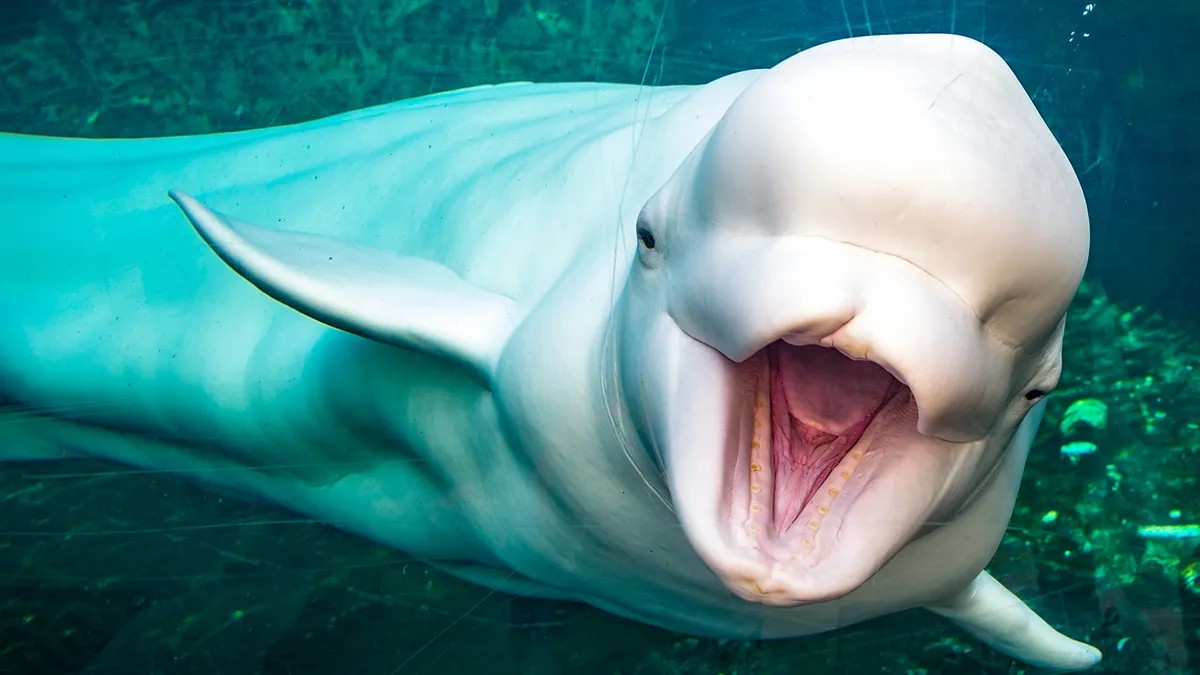
The beluga whale—often called the “white whale”—is a highly specialized Arctic cetacean renowned for its striking color, complex vocalizations, and unique adaptations to survival in extreme environments. These animals occupy the frigid waters of the Arctic and subarctic oceans, where they’ve thrived for centuries despite harsh conditions and the presence of formidable predators.
Physical Adaptations to the Arctic
Belugas are easily distinguished by their pure white coloration in adulthood, a trait that offers critical camouflage among pack ice and snowy Arctic landscapes. Unlike many whale species, they lack a dorsal fin, instead possessing a flexible dorsal ridge allowing them to maneuver efficiently under sea ice without injury. This is essential for avoiding both killer whales and polar bears, their primary natural threats.
Another remarkable adaptation is a fully flexible neck—something rare among cetaceans. This allows belugas to turn their heads laterally, improving their situational awareness in murky waters.
A Vocal Species: The “Canary of the Sea”
Belugas are among the most vocal of all whale species, earning them the nickname “sea canary.” Their repertoire includes whistles, clicks, and chirps used for communication and maintaining contact in low-visibility Arctic waters. Scientists have documented dozens of distinct vocalizations, suggesting a complex social structure and potentially even regional dialects. Why does this matter? The beluga’s communication system is crucial for coordinating hunting, migration, and predator avoidance in a challenging environment.
Ecology and Behavior
Belugas are relatively slow swimmers compared to other toothed whales, preferring to travel in pods along coastal areas, estuaries, and open waters from Alaska to eastern Canada. Their diet consists primarily of Arctic cod, but they also consume salmon, squid, and octopus. Hunting often takes place near breathing holes in sea ice during winter, demonstrating their ability to exploit even the most frozen environments.
Belugas exhibit seasonal movements, sometimes entering large river systems like the St. Lawrence River to find food and safe calving grounds. Pods typically consist of adults and calves, cooperating in feeding, migration, and predator defense. Mating occurs in late winter or early spring, with females giving birth to a single calf after a roughly 15-month gestation period. Calves are born dark grey, gradually fading to white over several years.
Conservation and Research
The beluga has captured human imagination for centuries, famously appearing in Herman Melville’s Moby Dick as a symbol of obsession. In the real world, researchers continue to monitor beluga populations across the Arctic Ocean, tracking trends in places like Cook Inlet, Alaska, and the Bering Sea. Why is this important? Rapid Arctic warming and sea ice decline are reshaping their habitat, making long-term monitoring essential to understand how these resilient mammals will adapt.
Studying belugas provides invaluable insights into how marine mammals survive in extreme environments. Their adaptations and behaviors offer clues about resilience in a rapidly changing world.
The beluga whale stands as a testament to the power of evolutionary adaptation, a species uniquely equipped to thrive in one of the harshest yet most beautiful corners of the planet.