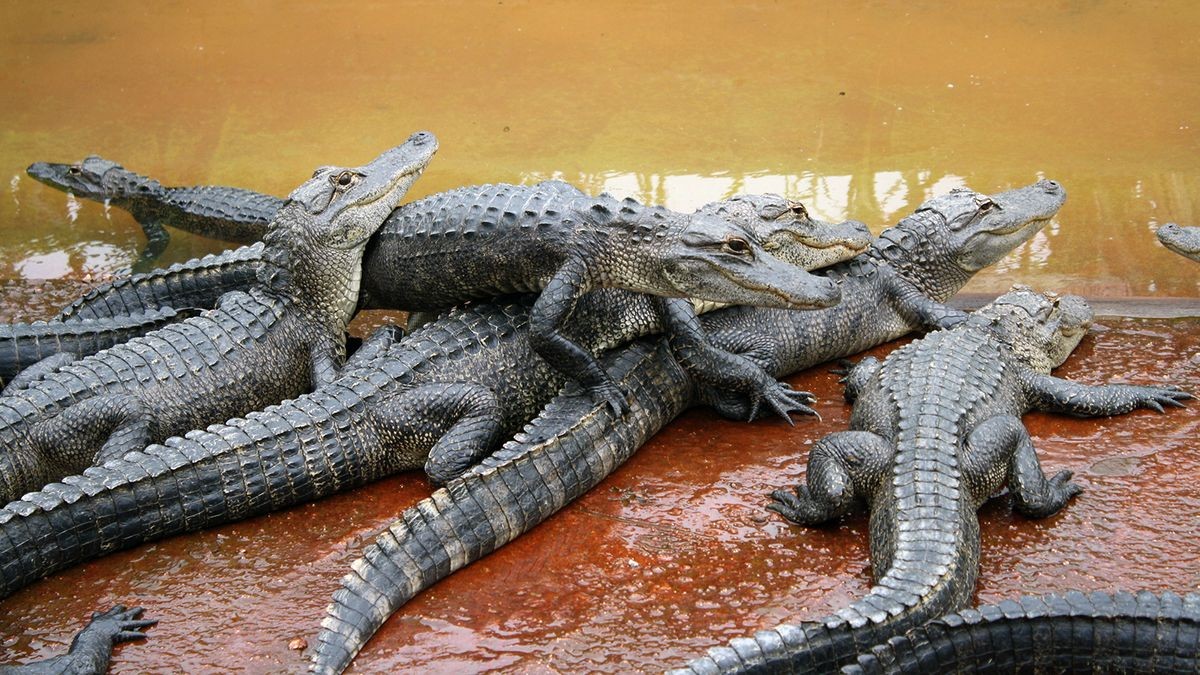
Have you ever wondered what a group of alligators is called? Unlike many animal collective nouns rooted in playful imagery, the term for a gathering of alligators is surprisingly formal: a congregation. This might seem odd for creatures often associated with ambush predation, but it reflects how humans historically observed and labeled animal behavior.
Why “Congregation”? The History of Animal Group Names
The naming of animal groups is rarely scientific; it’s a blend of observation, history, and linguistic quirk. Just like “a murder of crows” or “a pride of lions,” the term “congregation” arose from how people saw alligators gathering. Alligators don’t form tight-knit social structures like mammals. Instead, they tend to cluster together for practical reasons: primarily basking in the sun to regulate body temperature or simply sharing a favorable resting spot.
Alligator Behavior: From Congregations to Nests 🐊
The term “congregation” is widely accepted in wildlife references and dictionaries, though informal terms like “gang” or “nest” (for mothers with hatchlings) sometimes appear. However, these are less common. Adult alligators will often sleep close together in cooler weather to conserve heat, creating the crowded shoreline image many people associate with them. This isn’t about social bonding; it’s pure pragmatism.
Unlike mammals that maintain family units, young alligators disperse once they mature. A congregation is less a family gathering and more a temporary collection of unrelated individuals taking advantage of the same resources.
The Odd World of Collective Nouns 🦉
Animal group names vary wildly in tone. Some are descriptive (“a school of fish”), others numerical (“a swarm of insects”), and some lean into dark humor (“a murder of crows”). Alligators fall somewhere in the middle. The word “congregation” sounds deliberate, but it fits the reptiles’ detached behavior – they gather without much social interaction, unlike bears, cats, or otters, which form tighter groups.
Ultimately, these names are human constructs meant to categorize and describe the natural world. Whether it’s a raft of otters, a gaggle of geese, or a congregation of alligators, these terms add color and clarity to how we perceive animal behavior… even if the animals themselves don’t care.
In short, alligators gather in congregations because this term accurately reflects their pragmatic, rather than social, behavior. These collective nouns are more about human observation than the animals’ internal lives.